Research in 2004 by the University of Westminster* came up with some intriguing results. Our general feeling is that the situation with regard to sound recording has probably changed very little since that time, but it will be interesting to see the outcome of the follow-up study that the University is now conducting.
The University’s original research recorded that figures from the BPI, the trade organisation of UK record companies, showed that ‘jazz’ CD sales made up about 2% of all sales, and that this equated to around £38.6 million at that time. Despite the low percentage of jazz against other music sales, this sounds like a lot of money, but there are other factors that need to be taken into account.
90% of the sales included internationally-known acts from North America and the UK, but it also included many re-issued CDs by American, foreign and British artists that were produced in large numbers and heavily marketed by major record companies.
The research found that in 2004, major record companies and the main ‘independent’ record companies were issuing very few new recordings by British jazz musicians, and those musicians with contracts tended to be the vocalists and singer/pianists such as Jamie Cullum who the companies saw as having ‘cross-over’ potential.
About 1,000 jazz CDs were being released each year to the UK market, and whilst the majority were re-issues, there were about 200 and 300 new CDs issued by British jazz musicians. 23% of the musicians responding to the University of Westminster study said they had participated in ‘commercial sound recording’ in 2004. About half the CDs were self-produced by jazz groups or soloists, mainly for mailing to promoters and for sale at gigs. The remainder was issued by about 30 specialist jazz labels run by musicians, industry professionals, or by enthusiasts.
The above figures contain a key factor that has emerged in conversations whilst preparing this article. Generally speaking, jazz musicians do not expect to make a significant profit from recordings. They expect sales to be small, but they also see them as an essential promotion tool, a ‘calling card’, from which they hope more work will emerge.
The 2004 research reported that bands sold between 15 and 50 copies of their CDs to audience members at a gig, or an average of between 200 and 300 a year. Such CDs had an ‘active life’ of three years if the band toured frequently. There is a reciprocal factor here. A band needs to have the profile to book frequent tours and CDs can help with this, but a band that does not log up gigs at different venues will spend more time playing to the same audience and the market for their CD sales will clearly be correspondingly smaller.
We shall deal with the economics of distribution in a future article, but it is worth mentioning here that the direct sale of CDs by musicians over the internet also needs to be taken into account. We do not have any figures, but the growing number of musicians using websites such as MySpace to sample and advertise their recordings must have some impact on the number of sales being made.
The market for downloading music from the internet is also growing, but correspondence to this website suggests that the growth is relatively small as far as jazz is concerned. One correspondent from outside the UK has commented on the limited range of jazz available to download, compared to other genres. The University of Westminster study also found that some label owners believed that the lesser audio quality of MP3 recordings compared to CD was off-putting to some jazz listeners. This comment has also been made to us more recently by a recording engineer who believes that jazz listeners are particularly critical of the quality of music recordings.
Nevertheless, the concept of making a recording is still seen as valuable, despite the small immediate financial return, and if a recording is to be used partly as a promotional tool, it needs to be of a satisfactory quality. A cheap recording made in the local church hall or pub and then transferred to a computer to run off a number of CDs, may well result in a poor end-product. A recording is a reflection on the band’s professionalism. If it is intended that other musicians or other people in the recording industry should listen to it, those listeners will soon notice whether the recording is well made.
The University of Westminster study suggested that a band might sell 200 to 300 CDs a year if they toured frequently.
Taking 200 CDs, the lower of these figures, the current costs for producing recordings to a professional quality appear to be as follows (figures will vary depending on the recording studio involved and the requirements of the band):
 For around £750 to £1,000 it is possible for a band to go to a recording studio and walk away with 200 CDs, including the artwork and liner notes. Direct sale of these CDs at gigs or over the internet at £10 each, could bring a gross profit of between £1,000 and £1,250. If that figure were to be divided equally between the members of a six-piece band, each musician would make a profit of between £166 and £208.
The above figures depend on whether all 200 CDs are sold. It is likely that a proportion will be used for marketing purposes or given away complimentarily, and other costs – postage, transport, etc. will soon reduce the profit figure.
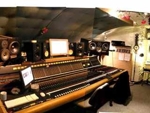
The cost of £750 to £1,000 to produce a CD in conjunction with a recording studio is based on the following process. Using a professional studio offers a number of advantages – the acoustics will be better, the equipment will be of a professional standard and the studio and its engineers will know what they are doing.
A studio might charge £250 a day for the recording session and the services of an engineer. Charges may also be available by the hour or by the project. At least two studio days should be planned, but it would be safer to plan for three, or at least two with with a little contingency.
Studio time is clearly at a premium and the amount of time needed will always depend on how much preparation time has been put in beforehand. The band should know what it wants to record and should have prepared and practised the arrangements in advance. Each musician should know what is expected of them. A comprehensive meeting with the studio will iron out critical expectations ahead of the recording dates.
Advice about local recording studios will be available from others who have gone through the process and from performing rights organisations such as BMI, ASCAP and SESAC. Studio space needs to be appropriate for the size of the  band and the musicians need to feel confident with the studio engineers and the studio environment. Studios should be able provide instruments that might be troublesome to transport, the obvious one being a piano. Some will be happy to set up equipment the evening before when initial decisions can be made about where microphones are placed, whether the band all plays in one room, or whether some musicians play in isolation booths with everyone wearing headphones.
There are a number of websites that give more information about studios and what to look out for including, at a general level try clicking here Wikipedia
What constitutes a day’s recording will depend on the studio – some are happy to work a ten-hour day, but whether the musicians can play well for that long is another matter – recording sessions can be quite intense. At the beginning of the first day, the musicians will need time to become acclimatised to the studio environment before recording starts. The engineer will also need to get equipment working at the right levels – trying out different positions to get the right balance, placing microphones appropriately, etc.
If everything goes smoothly, by the end of the first day the initial recordings could be completed, but it is wise to allow for two days. The studio is then likely give each musician a ‘draft’ copy of a CD to take away and listen to.
Listening to the CD and discussing the results may well lead the band to ask for some changes. Perhaps the bass is not prominent enough here; perhaps the trumpet is too strident there; perhaps the drums need enhancing and cymbals softening. Perhaps someone is very unhappy with their solo and would like to do it again (although one engineer has argued that jazz improvisation is ‘of the moment’ and should be accepted as what happens at the time – ‘it is what it is’).
A further day with the engineer at the studio irons out these problems. The engineer will have already mixed the tracks to some degree during the recording, but the mixing proper begins when the musicians bring their comments and the recording is adjusted. It may be possible to just re-take a solo and fit it in, or a number may need to be recorded again.
The cost of two days was perhaps £500, but it is wise to allow a contingency for a little more time, perhaps £75 making a total of £575. The cost of three days could make the total £750.
Happy with the final result, the band could now walk away from the studio with a Master of the recording either on CD or as a computer file. The Master belongs to the band, or to the person producing the recording on behalf of the band, whatever has been agreed.
However, it is possible that a decision might have been made to commission the recording company to run off and package the CDs professionally, together with liner notes and printed labels. This is something that should have been discussed with the company at the beginning of the process so that they can already be preparing the artwork. The costs will depend on whether a straightforward liner or a booklet is to be prepared and how many pictures etc. are to be included, but a studio could design basic packaging and print 200 CDs from the Master for around £175.
Altogether, the band is likely to have spent between £750 to £1,000, excluding any other costs such as travel and overnight stays, depending on where the recording studio is located.
(We should particularly like to thank Toybox Studios in Bristol for their help and information – the company’s website can be found at www.toyboxstudios.co.uk )
The following recollections are from a music student who was fortunate enough to have the opportunities and informal contacts to help him make a recording, but his experience of putting the recording together is useful.
“I was initially approached by someone who asked me to record an album on his label, but at the time he was unable to confirm a date to book the recording. I decided the best thing was to get the music written and the band ready, rather than sitting back and waiting. This was definitely the right plan, as otherwise it might never have happened.
“I then found that I had the opportunity to record at College over two days. The band worked for free, although we decided to pay a guest musician at £300. We were lucky in that I had a friend who was a sound engineer and he generously offered us his time without charge. The photographer did a two-day shoot for nothing and the artwork girl also agreed not to charge us. The sound engineer was also able to provide loads of good microphones, pre-amps and other equipment.
“Many of the tunes were recorded in sections and put together later. We only had two days in the studio and some very difficult music to record, so careful time-management was required by me. I needed to make it as easy as possible, hence recording tunes in sections. Having recorded the album. I then needed to get a finishing mix together.
“It was always intended that a lot of post-recording editing would happen – it took a few weeks to choose takes and sections, and then about 4 days of editing, again at no cost, at the sound engineer’s house. His involvement is what made the whole thing possible.
“I sent the recording to the record company who had first approached me. This paid off as they agreed to have the recording professionally mixed and mastered in their studio. This cost the record company about £300 a day for three days, but it made a massive difference to the final sound. There was a lot of discussion as I was pretty obsessive about what I wanted, and the three days probably turned into more like four days.
“So, album done. All the time during the mix etc. I was juggling getting the artwork done and arranging the release date, etc. The album has been distributed by a distribution company who also took responsibility for the manufacturing. With regard to pricing, this was all sorted out by the distributor and the record company. I own the master tapes and the compositions.
“The costs for professional mixing and manufacture were approximately £1,000 each (£2,000 in total). My other costs were about £500 for the guest musician and feeding the band for two days. The price the recording company gets from the dealer is around £6 and I get 70% of that. Obviously on gig sales there is no ‘middle-man’.
“In the end, the opportunities people have offered me have been fantastic and very generous”.
© Sandy Brown Jazz 2008 - 2014
* The Value Of Jazz In Britain a report commissioned by Jazz Services Ltd. From Mykaell Riley and Dave Laing, University of Westminter, Published December 2006. The report is available to download from Jazz Services Ltd.