1920s Jazz: At 78 RPM?
Many of us assume that old jazz recordings were made just as we hear them. Richard Alabone writing in the journal of the City of London Phonograph and Gramophone Society Ltd (CLPGS) begs to differ:
Over the years there has been considerable controversy in jazz circles regarding the correct speed of old jazz records; there seems to be something wrong. In the jazz press there has been discussion about particular records: should they be played a bit faster or a bit slower? I am of the opinion that this discussion was way off the mark, and believe that most recordings during the 1920s were deliberately mastered at about 58 RPM! Many jazz lovers consider this an outrageous suggestion and will not even consider the possibility. On the other hand, some will say the records all sounded manic. What is the truth?
Sixty years ago I had a wind-up gramophone and used to play a trumpet along wi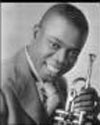 th recordings of Louis Armstrong. The only way I managed, was to turn the speed control to very slow, that is about 58 RPM, making the key lower by about two and a half musical tones. Nowadays I re-record CDs on to cassette on a karaoke machine, which has variable speeds, and have now studied much of the popular recorded jazz of the twenties, and this discrepancy persists. From the Original Dixieland Jazz Band in 1921, to the West End Blues of Louis Armstrong in 1929, the recordings were deliberately made to sound fast and jazzy, it was good for business as the records sold well. The musicians liked it, because improvised playing at a relaxed slow speed was much easier, and led to fewer mistakes and expensive re-takes.
If this really was the case, the questions to be addressed are: Why has this not come to light before? Why was it such a well kept secret?
In 1925, it was not a secret. Gramophones had a governor control to set the speed where you liked. This new music had to sound jazzy and people played it at the speed they needed to dance the Charleston. Perhaps the first band to be recorded in this way was the Original Dixieland Jazz Band (ODJB) and everyone liked it. The records sold well and although the label said 78 RPM no one complained, so from  then on, jazz was mostly recorded at 58 RPM which was fine for about 10 years. After that, the governor control mechanisms became obsolete, but jazz lovers had become used to the music sounding this way; jazzy and fast.
Today if we see '78 RPM' on an old shellac, it is played at 78; no questions are asked. In fact, any suggestion that jazz recordings of the 1920s are all too fast is generally met with surprise and disbelief. But I have re-recorded a selection of tracks at 58 RPM with each one followed by a few bars at 78, and most listeners are amazed and convinced at the time, although they might not be so sure later, while some older jazz lovers cannot change their years of indoctrination and are hard to convince. Clearly there is something amiss with the speed of 1920s jazz. By 1929 it seems that the recording speed started to be altered: Bix Beiderbecke's recordings in New York, April 1928, were slightly faster, but it was only after 1930 that the Armstrong recordings were approaching 78 RPM. Even today the speed of some popular music is incorrect.
Analysis is made more difficult by the fact that the speed sometimes varied during the cutting of a track due to more power being needed on the outside grooves, or during loud passages. Also, there was absolutely nothing standard about this; the speeds seem to vary  from 56.6 to 60.2 RPM for no very good reason. It seems that all records were made in easy keys, and very slow, allowing musicians time to improvise. Jazz playing is not rehearsed note for note, nor written down, even though most have head arrangements and some, for example the later Beiderbeckes, had written backing for spontaneous jazz improvisations.
During the Armstrong Hot 5 and 7 recordings they played in a deliberatly relaxed style which sounds fine at 78 RPM; but at 58 RPM Armstrong's vocals appear to be somewhat ponderous, and sung at the lower end of his range, which I believe was all quite deliberate. On the other hand, Lil Hardin's vocals seem fine at 58, but sound mouse-like at 78 RPM. Interestingly, a large cymbal was used for these recordings which achieved a wonderful but false sound at 78 RPM.
The speed of a batch of Armstrong Hot 5 recordings, made by Okeh in early 1926, has been investigated by Norman Field who concluded that all these records were recorded at 82.17 RPM so should be replayed even faster than 78 RPM. In my opinion this particular set of recordings was made at 60.2 RPM. Clearly Norman and I have not been able to agree on this point, but we do agree that 'there was something curious going on' and that 78 RPM was not the recording speed.
Although my wind-up gramophone has long since gone, I listen to jazz on CDs, but it is easy to check the recording speed. This can be done by noting the key at 78 RPM, by playing my cornet with the record, then varying the speed to find the key that sounds plausible, noting the key in order to find the pitch difference in semitones at the two speeds. A quick calculation using the ratio of frequencies of musical notes, from an acoustic table, gives me 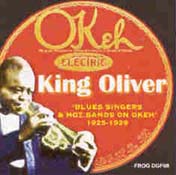 the speed at which the disc was cut. For example, Dippermouth Blues by King Oliver in 1923, is in C at 78 RPM, but appears to be correct in the key of G. C is 523.25 cycles/sec, and G is 392 cycles/sec, so the original cutting speed is 78 x 392, divided by 523.25; that is 58.4 RPM. The question then arises: Why were all the records cut at about 58 RPM? The answer is that any intermediate speed would result in some very unlikely keys at 78; whereas at 58 to 75 equates to all keys being reduced by one flat, for example G to C.
Many musicains and jazz enthusiasts to whom I have spoken have mixed feelings about the theory that all recordings were made at such a slow speed. My analysis of possible keys indicates that all the records were made at approximately 58 RPM, at which speed they sound relaxed and carefully improvised. Where there is no proof or written evidence, it is only the recordings themselves that can tell the true story. First, listen to a track at 58 RPM, which sounds perfectly plausible; then follow it by the last few bars again, but at 78 RPM, and you will probably be quite convinced.
When the above article appeared on the website in Feruary 2011, it brought some interesting responses:
Brad Kay wrote:
'I have to comment on the theory that '1920s "78" rpm jazz records were actually recorded at 58 rpm, but intended to be played at 78: To fully capture the wrongness of this idea, I would need to coin a word that means "MORE than wrong." Stay tuned for that. Meanwhile, for starters: When a record is played 25 per cent faster than its original speed, it not only raises the pitch and tempo, but alters the timbre of everything. Human voices sound like the Munchkins in "The Wizard of Oz." Cornets, trombones and reeds also sound tinny, and completely out of their natural range. No actual live voices or instruments would ever sound like that. A record played 25 per cent slow sounds equally unnatural, only on the low, slow side.
King Oliver's "Dipper Mouth Blues" is indisputably in C, according to his own manuscript, and testimony from Louis Armstrong. To find the correct speed of Oliver's Gennett or OKeh records, pitch "Dipper Mouth" in C, and you have it.
There is indeed considerable leeway in record speeds from those days, but nothing like what is proposed. In fact, this can't be a serious proposition. You are pulling a Monty Python, and just want to enrage poor musicians like me for the sadistic joy of it.'
Alastair Clark said:
'I found the piece on speeded-up discs hugely interesting. Some years ago I had a professional classical pianist round at the house and played him my record of Pete Johnson's spectacular Death Ray Boogie (1941). His first reaction was: "Is that a 45 played at 78?" I just laughed this off, but he carried on and said it must have been speeded up somehow. "What makes you say that?" I asked, adding: "These guys took pride in playing faster than the next guy." He wasn't convinced. "I can see how you could, I guess, play that fast by simply rippling over the keys, but not when you're smashing the keys with his kind of percussive force." Then he walked over to my piano and asked me to put it on again. "That's bizarre," he said eventually, "by my calculation he's playing at breakneck speed in B-bloody-natural! - in which case he's been playing in that key since he was a child, and it comes naturally to him ... or the recording has been speeded up." I didn't believe him then, but now I do!'
Cado Bell writes:
'Another consideration to take into account was that studio pianos and orchestral concert grands were tuned to A=442Hz then, compared to 440 here. Many US record album imports arriving through merchant ports like Liverpool sounded slightly higher when played along with our instruments. British re-pressings of US recordings only exaggerated the phenomenon as the masters were of course 442Hz, but pressed and not cut here, thus when played back at our 33 and a third, the problem appeared exaggerated further. Merchant seamen returning from the US had the closest reproduction.'
Richard Alabone responds:
As an old muso I am quite convinced that I am right. Regarding Brad Key's response –one of the criticisms was that the timbre is altered. Yes: it is, and for the better, it's still plausible at 78 RPM. Also 'voices sound like munchkins' – listen to Lil Armstrong at 78 and then at 58 to see what I mean. He quotes Armstrong's testimony about dipper mouth blues being in C. Louis knew full well what was going on, so would obviously talk of the key as at 78 RPM.
© Sandy Brown Jazz 2011-2014
Back to top