Contrast this with the majority of students studying at a jazz academies. If asked who Buddy Bolden was I am reasonably sure you would get a blank stare for your temerity in
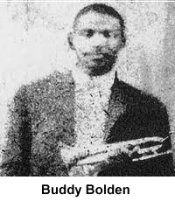 posing such a stupid question.
In April 2012, Peter Maguire shared with us what he called his 'rant' on Jazz Education that he had posted on his website:
Ask any student within a classical music conservatory who Beethoven was and ask him or her to say something about his music and I am confident that you would receive a coherent reply. Their preference may be for the for work of Harrison Birtwhistle, Stockhousen, or maybe Steve Reich. Nevertheless I am reasonably sure they could, in the majority of instances, put together a sentence or two about the work of Monteverdi.
Contrast this with the majority of students studying at a jazz academies. If asked who Buddy Bolden was I am reasonably sure you would get a blank stare for your temerity in posing such a stupid question.
Why is this? Why do so few jazz academy students have little or no knowledge about the history of the genre they have - willingly I assume - chosen to study.
Several of my friends and acquaintances teach at sundry jazz academies. One in particular has a profound knowledge and understanding of the history of jazz but tells me it is a struggle to get some students to understand that all there is to be discovered about harmony has already been achieved.
Another nodding acquaintance - so I hear - when asked by a student about Django Reinhardt received his curt reply "you don't want to bother with that stuff!".
Yet another overhearing a conversation concerning Shorty Rogers remarked that "perhaps he wasn't very tall.". Joke ? Sadly no !
Recently I met up with a musician I use to work with on a regular basis. He is jazz coordinator at an important academy of music. He was fortunate enough to be booked as a part of the rhythm section backing the late Red Holloway who was at that time on tour. My friend put together some of his students to act as support band thinking this would be a great experience. It was an experience - but for himself. Just as soon as the student group had played their set they packed up and left presumably never considering for a moment that Red Holloway was worth listening to.
All of the worlds greatest musicians and composers - with rare exceptions - were and are steeped in the history of music. Jazz is not an exception. No Armstrong - no Miles. No Lester Young - no Coltrane. No Ellington - no Monk. Innovation and revolutionary development is organic - it builds on a profound knowledge of what has gone before. This is more or less axiomatic of all forms artistic endeavour.
Should we be gravely concerned about this lack of knowledge and appreciation of jazz history ? I am convinced that it should concern all who love this music. For me the work of Jelly Roll Morton is just as significant and no less valuable that the work of John Coltrane.
Perhaps this is why so much of what I hear - though technically impeccable - is so unsatisfying and really not very interesting - audiences feel this too. No story, no depth, no foundations. Sadly a musical house of cards.
3.2012
Peter Maguire, Jazz Clubs Worldwide, 2012
Alvin Roy wrote supporting Peter's article and saying:
I was interested in his (Peter's) views and wholeheartedly agree with what he says. I'm not a schooled musician, never went to college or attended a jazz course and don't read music or understand chords, as anyone I've ever played with over the years will attest to, but I used my ears and listened and absorbed our music and learnt how to play in a non-academic way. That is not to say that if I had my time over again, I would do the same thing. I would learn my instrument in the generally accepted fashion and also develop my "ear for jazz" at the same time.'
'I have been told by musicians who have attended "jazz colleges" that the tutors, when they talk about traditional jazz are actually referring to Be Bop as if jazz before this didn't exist. This means that the 'Greats' from the twenties, thirties and early forties are at the very least, irrelevant, or at worst, non-existent. To say that this was a sad state of affairs would be a gross understatement because it omits a large and significant part of jazz history and leaves a huge gap in the knowledge of a young aspiring musician attending one of these colleges. Jazz didn't start with Be Bop and to pretend it did is stupid and ignorant and doesn't help young musicians to
fully understand our music and appreciate it's history. Perhaps they should all be made to watch the Ken Burns series of documentaries.........'
4.2012
Pianist Theo Jackson presents a different argument:
Jazz education has never been stronger. The idea that young academy musicians show no interest in early jazz sounds sad and mis-guided to me. The argument that classical musicians have more respect for their oeuvre sounds equally silly.
I gained a music degree from Durham University, a classical music department. I have since formed a career as a jazz musician alongside bandmates who are all music college graduates. Their interest in many varieties of jazz, and of music in general, has inspired my listening habits, which are now very wide. My saxophonist, a Royal Academy graduate, is readily able to give detailed biographies of so many early jazz musicians. And we all respect that the music we love was born out of this era.
So why should every young musician know who Buddy Bolden is? Firstly let's make it clear that, with respect to Mr Bolden, history will not give him the same profile as Beethoven. That comparison is meaningless. So let's make two more realistic comparisons:
(1) Beethoven is considered to be the most celebrated classical composer of all time. Who is the most celebrated jazz composer of all time? Probably Duke Ellington. By all means please go to the conservatoires and if you find any student who doesn't know who Duke is then your point is made. But let's be honest, that won't happen.
(2) Buddy Bolden was a fairly high profile performer in New Orleans until the early 1900s. He left behind no recordings. I'm not sure who I could compare him to despite my education in classical 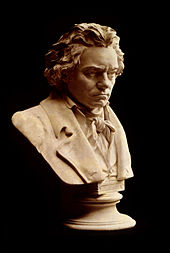 music.
All of the composers you listed left behind a tangible legacy. We can remember that and enjoy it and study it. We cannot study the performers who originally played Beethoven's Eroica. We don't know their names and they left behind no recordings, for obvious reasons.
Beethoven
The music college graduates are technically wonderful musicians. They are also passionate jazz enthusiasts. They are moving the music we love in a wonderful new direction and it would be a shame if the audience felt so threatened by the change that they didn't open their ears to the inspiring music being made.
Nostalgia may be comforting but it is innovation that has always been the foundations for this great big, all-encompassing house built of cards.
5.2012
There appear to be a number of questions emerging from this debate:
On one of these points, someone has said that they regret that 'Standards' are not played more, and another that a listener is better able to judge a musician's ability to improvise if the listener knows the theme. In their set at the Yamaha Jazz Schoalrship Awards (see above), the young scholars played two 'Standards' beginning with It Could Happen To You. The London City Big Band is made up almost entirely of Guildhall scholars and their two sets each month at The Spice Of Life in London are made up of 'Standards'. The word 'Standard' also needs better definition - to many it means the Great American Song Book or early classic jazz numbers, but other frequently played tunes have since entered the repertoire.
On another point, I have been to gigs by contemporary jazz musicians over the past year in pubs and concert halls where the event has been very well attended by people of all ages, and to similar gigs where the numbers have been small with an older age group in the audience. Are there other factors at play here? (Ed.)
Peter Maguire from Jazz Talk Forum responds to Theo Jackson's arguments:
Theo Jackson misses the point about my using Buddy Bolden as an example of a key figure in jazz history. I was using this as a marker for a more general observation about a lack of knowledge about the history of jazz.
My original observation that jazz college students have lack of knowledge about jazz history was not just plucked out of the sky. I am happy to number amongst my acquaintances teachers who work in major European jazz conservatories. Conversations with them over recent years do in general confirm my original conclusions. I will add that I value as a close friend a musician who is rated as one of the best in the world - a graduate of both Berklee and The New England Conservatory. He is in total agreement with me concerning the lack of interest and knowledge of jazz history amongst the average student.
I have nothing whatsoever against innovation. However except for very rare exceptions important developments within any field of endeavour emerge from a profound knowledge of what has gone before.
 I am absolutely in agreement there has never been so many technically wonderful musicians on the scene. But technique is a means, not an end. Many audiences do not feel threatened. They just feel untouched. The music has nothing to say to them. Listening to one of the judges speaking
during the recent BBC Young Musician of the Year Contest I was struck by her observation that "Technique is taken as read. What matters is if or not the performer is telling the audience a story."
I am absolutely in agreement there has never been so many technically wonderful musicians on the scene. But technique is a means, not an end. Many audiences do not feel threatened. They just feel untouched. The music has nothing to say to them. Listening to one of the judges speaking
during the recent BBC Young Musician of the Year Contest I was struck by her observation that "Technique is taken as read. What matters is if or not the performer is telling the audience a story."
Nostalgia plays no part within my own outlook. I can enjoy Jelly Roll Morton and Coltrane. Though I do appreciate that this is not so with significant numbers of jazz fans.
Why am I so concerned? I have loved jazz and been an active jazz musician since my mid-teens. I launched Jazz Clubs Worldwide on the internet seventeen years ago and receive email and intelligence from all parts of the world on a daily basis. The facts are simple. Jazz at this juncture is not in particularly good health. Clubs and venues are closing. Festival attendances are diminishing. Jazz club audiences are getting smaller. Within the United Kingdom the average age of jazz audiences is well advanced in years. Within the past couple of weeks I have been discussing the international jazz scene with the individual who maintains the biggest jazz site on the Internet. Traffic, page views, time on the site are very seriously down.
Jazz musicians are no different than any other artists. Artists they may be, but they are a part of the entertainment business. Unless they want to spend their musical lives playing within the confines of a box, they have to provide potential audiences with reasons to want to come and hear them.
Do I have all the answers. Of course not. Do I have concerns - well, yes. Perhaps others might be able to give me their own points of view.
Alvin Roy also responds:
In reply to Theo Jackson's article regarding jazz education, I'd like to make it clear that I never stated that the students on jazz courses had no interest in the history of their music, but that it had been reported that some tutors, when talking about 'traditional jazz', are in fact referring to be-bop. 'Traditional jazz' is hardly the term most of us would use to describe the music that emerged with Parker, Monk, Gillespie et al.
Also, thanks to recordings, any jazz student can listen to the music played by the early musicians but obviously not to those who played before recording was invented, like Buddy Bolden, who Theo mentions. Our music is in its infancy if compared with the classical field, and one wouldn't expect a classical student to be taught about every aspect of classical music from the very earliest embryonic musical sound to the present day. However, I would expect a jazz student to be told by his tutor about the styles of jazz played before be-bop evolved because the history of jazz is much shorter, and could and should encompass these early forms which are the foundation of the jazz music that we hear today.
Nobody disputes that the graduates from these colleges are not excellent musicians and have a love for their music - that's how it should be and I'm certainly not threatened by their exploration into new directions, as long as the path they take doesn't stray so far away from the concept of what jazz is and become a totally new form of music which should probably be called "contemporary classical". In any case, this was not something that I mentioned in my article and therefore not relevant to the subject at hand but is something that could be discussed at another time.
I'm sure many musicians have their own feeling on the matter of 'what is jazz?' That 'can of worms' has been opened many times and is so subjective that very few people seem to agree on the finite definition and like many other art forms, it has created many an argument and debate – long may it continue!
8.2012
© Sandy Brown Jazz 2012 - 2014