
[Some computers might ask you to allow the music to play on this page]
KINGSTON-on-THAMES and JAZZ |
Bass player Ron Drakeford started writing this page in 2011 looking back at jazz in Kingston-upon-Thames in Surrey. Since then others have contacted us and we have added their memories to the page. Please let us know if you would like to add your memories or stories to the page and particularly if you are able to let us have any photographs of people and places mentioned here. As time passes, changes inevitably take place and so it would also be helpful if readers are able to update any information we have here.
Ron Drakeford
Ron Drakeford played with The Canal Street Jazzmen and Dennis Jones’s Preacher Hood Jazz Missionaries Band and then joined Bill Brunskill when the Missionaries were disbanded.
Ron eventually left the Kingston area and moved abroad. When he returned, he found that the jazz scene had changed whilst he was away. Undeterred, he continued to play jazz regularly for many years in the UK.
It was almost inevitable that Kingston, with its Arts College and Polytechnic (now a University) was likely to be a mecca for the jazz enthusiast. Within the town itself in the early fifties onwards, several venues became the predominant haunts of the student classes. Their patronage helped secure the lifeblood of the jazz scene there for many years.
Notable venues were The Fighting Cocks in London Road, The Swan in Mill Street (near the Arts College), a venue over Burton's the Tailors, always known as Burton’s and The Grey Horse in the Richmond Road. Later in the sixties The Railway Hotel at Norbiton became popular too. Other minor venues came and went notably the Jazz Cellar, the Jazz Boat (a converted Thames barge complete with sails etc) and the Commodore Club.
Of these The Fighting Cocks probably played the most significant part in the jazz scene as there was music there three to four nights a week at one stage. Burton’s was eventually to close around the mid-fifties as the venue was alcohol free. The growing trend amongst enthusiasts was not only to enjoy the music, but to enjoy the social activity associated with public houses - even if most of the crowd could barely afford a pint!
Probably around late 1955 to early 1956 I "found" the "Cocks" (as it was locally known) indirectly because of my elder brother – he was now into jazz and he used to frequent the haunt.
It was a Sunday night and I found my way in, not through the pub (I was more than a bit underage), but by a back entrance which led to an open yard adjacent to the pub via some high double gates. A detached building, which was probably a former stable block  was the venue. This building was about fifteen feet wide and forty feet long internally and was inhabited by the band at one end and about a hundred others crowded in and still finding room to jive. Amazing!
I paid my shilling and mingled. Bill Brunskill's Band was the resident Sunday night attraction. That first experience lives with me today, and Bill Brunskill was instrumental in helping budding musicians (myself included) along the way....
The Bill Brunskill Band outside The Fighting Cocks in 1964
Ron Drakeford (bass), Tony ? (clarinet), Bill Brunskill (trumpet), Bob Parr (drums), John 'Pedlar' White (trombone), Bill Skinner (banjo).
Photograph © Ron Drakeford
Sandy’s Barn was quite an appropriate name for the club at the Fighting Cocks, given the nature of the building. This club was born (so I am led to believe, as it was slightly before my time) out of the demise of the Bun Shop in Surbiton, regular players being the Jubilee Jazzmen. It was a great line up headed up by Dave Reynolds (trumpet), Dave Tomlinson (clarinet), Dave Cutting (trombone), Don Coe (banjo), Don McMurray (drums) and “Uncle John” Renshaw (bass). This band was later to form the basis of John Shillito’s band when Dave Reynolds became ill and Sammy Rimmington was later to join the line up.
I first heard the band with Sammy playing at the Commodore Club, situated above a boathouse on the banks of the Thames where the Hogsmill river meets the Thames. This was accessed via a narrow road along side the long-gone Odeon cinema in the High Street.
Sunday nights at the “Cocks” were always something to be anticipated as inevitably, apart from Brunskill’s resident musicians, there would be other aspiring players and well established musicians in attendance. All would get their chance to “sit in”. Bill was most accommodating. Grand finales were something else with last few numbers being played out with all musicians in attendance - assuming they could get on stage! Sometimes, an extra “front row" would be formed at floor level. Great stuff!
Names that spring to mind that were part and parcel of the scene then and were regular guest musicians, are the likes of Mike Peters, Neil Millet, Mole Benn, Mike Pointon, Dave Cutting, Bill Wilkinson, Jeremy French, Bill Greenough (who later became a band member), Les Allen (who also became a band member and is still playing). I am sure Geoff Cole was around too as he was (and still is) local to Kingston. Many more, I am sure readers will remember, that came for a blow. That was the nature of the scene, then.
Brunskill’s line-ups varied considerably over time, but in those early years the rhythm section was pretty much the same for a while. Resident and “borrowed “from the Jubilee Jazzmen were “Uncle John “ Renshaw (bass) and Don McMurray (drums). Bill Skinner on banjo was with Bill Brunskill “for ever”. The band played regularly on Sundays until the mid-sixties by which time they were relegated to playing in the bar because the landlord at the time decided to turn the “Barn” into a wine bar for his offspring to manage (Bad Move).
I, for my sins, was soon to take over the “second half” in those early days playing bass whilst Renshaw propped up the bar and downed his scrumpy. This was my apprenticeship. I knew nothing about bass playing at the time but I was not short on enthusiasm.
Renshaw’s bass was stuck together with Araldite and excursions up and down the finger board made little difference in note (just as well!). I joined the band around eight years later, following the disbanding of Dennis Jones’ Preacher Hood’s Jazz Missionaries.

Kingston was well prepared for the jazz influx due to the American Forces having a base in Bushy Park across the river from Kingston. This was a great source of unheard of records on this side of the Atlantic, and some lucky people got to listen or get hold of copies. Regular dances at the base also served to enlighten the populace.
Residents of Kingston and shoppers from nearby areas were occasionally treated to quite a spectacle of a marching band from the American base marching over Kingston Bridge belting out such well known chestnuts as “St. Louis Blues March” Great stuff!!!
Kingston Bridge

Quite a few pubs in the town tried to put on jazz but did not really succeed, The Dolphin and Three Fishes were two examples as the regulars in those pubs were a different “breed” and did not really gel with the jazzers who were out for entertainment and not a punch up!
The Grey Horse however was successful and looking back, maintained jazz content longer than the Fighting Cocks. The Grey Horse had a different approach, and that was to encourage different bands to appear, so quite a selection of bands appeared at that venue. The Cocks had purely residential bands. From looking at the Grey Horse website (click here), they seem to have a mix of music still on offer and it would be interesting to find out what jazz content is still available.
The Grey Horse, Kingston
Fast forward a couple of years and the new wave of young “talent” was beginning to emerge around the country (skiffle inspired?) and the Kingston area was no exception. I was press ganged into the Canal Street Jazz Band by one Brian “Dipper” Duddy who is still drumming today with his Vintage Jazz ensemble. Brian went on to play with the likes of the Mac Duncan band and led the Georgia Jazzband which has been active on the scene throughout his life. Brian was replaced in the Canal Street band when National Service called, initially by Dave Preece and then by Lloyd “ Bumsey” Taylor (Lloyd sadly died in Australia a few years back and was still playing there with the Unity Hall Jazzband - a local favourite of vocalist Carol Ralph.)

The Canal Street Jazzmen circa 1958
Pete Webb (clarinet), Jim Susans (tenor banjo), Rob Davies (trumpet/cornet),
Brian "Dipper" Duddy (drums),
Ron Drakeford (bass),
Mick Hill (trombone).
Photograph © Ron Drakeford
After a short-lived jazz club experience at Weston Green, the Canal Street band took up residency at the Fighting Cocks on a Thursday night. This proved to be a popular evening with the student population in the area. Other venues were soon to spring up and the Canal Street band was often sought after to play. Notably at the Jazz Cellar, and the Jazz Barge. Both were short-lived affairs but had a quirkiness about them which appealed to the students.
Once the “Trad Boom” took hold, concerts were held at the Coronation Hall where approximately once a month bands such as Bilk, Ball, Colyer, Dick Charlesworth, Alan Elsdon, etc. entertained the folks. Needless to say the local Canal Street band was hired to complement the program on each occasion. This was great from our standpoint as usually there would be an invitation to join the main band for the last few numbers. Great experience!
News of the increased popularity from the student classes led bands from further afield to try the Kingston scene. Keith Smith and his Fron-Zi-Me Jazzmen set up residency in the Swan, Mill Street. This had been a venue for the Continental Club so was well used to musical evenings. It was well located also for the Art College, so one would have thought it would be successful. It was for a while, but again not too long lived.
Benefit nights at the Cocks were held on a few occasions for the likes of Punch Miller and Kid Sheik and other New Orleans musicians.
Here is Kid Sheik on trumpet playing Walk Through The Streets Of The City with Captain John Handy on alto.
The Thursday Canal Street club night hosted these and were organised by Barry Martyn. Typical benefit nights were played partly by the Canal Street resident band but the majority of the evenings were the province of guest bands and musicians. Barry had his  Ragtime band at the time with a useful trumpet player (from Mill Street Kingston) Clive Blackmore, and was very much in the Kid Howard vein, ably assisted by the late Pete Dyer on trombone. Other participating musicians were Norrie Cox with his San Jacinto band and Keith Smith’s band, renamed The Climax Jazzband by now. (This later reformed when Keith turned Pro and became the Confederates)
Keith Smith
The likes of Mike Pointon, John Dix, John Coles, Bill Cole, John Boddy, John Rodber, Alan Day, Gerry Green, Gerry Card. Dave Evans, Ron Rumbol, Eric Flood, Neil Millett, Roy Maskell, Brian Rutland, Jim Holmes and Barry Johnson amongst other were regular contributors to these evenings and of course were well attended. The proceeds were appreciated by the New Orleans recipients. Indeed Barry Martyn still talks fondly of those evenings to this day.
Towards the end of the fifties and beginning of the sixties, and with the advent of Rhythm and Blues becoming popular with the younger generation, many of the local musicians of that genre were inspired to some extent by the jazz scene and took inspiration from it.
As far as Kingston was concerned, the likes of Eric Clapton, Keith Relf, Paul Samuel-Smith were present and would have congregated initially in the yard between the hall and the pub itself at the Fighting Cocks. Hence it is widely thought that this was the origin of the name for the Yardbirds.
Frequent followers of the Canal Street Band at their venues both at The Fighting Cocks (Thursdays) and The Swan in Mill Street (Fridays) took to playing during intervals to get that all important experience of public playing. Disputes at both the aforementioned public houses with the landlords at the time culminated in a move to the Railway Inn (Tavern?) at Norbiton.

By now the Rhythm and Blues brigade both following and musician-wise were gathering in strength and the move to Norbiton proved to be the spring board for the Yardbirds and Eric Clapton. (Click here for more about Eric Clapton and the Yardbirds).
The Yardbirds in 1966 -
Jeff Beck, Jimmy Page, Keith Relf, Jim McCarty and Chris Dreja

The Canal Street band line up had changed as Dipper Duddy was away on National Service, replaced by Lloyd “Bumsey” Taylor on drums. Pedlar White had taken over trombone duties from Mick Hill who had now joined the Riverside band at Eel Pie Island. Rob Davies had departed to Norrie Cox’s San Jacinto band and his duties were taken up by Lennie “The Lion” Williams on cornet.
(Click here for more about Eel Pie Island).
Pedlar was to show Eric Clapton some chord changes and he made some bottlenecks for Eric out of wine bottles for him. The two, along with a long time friend “The Vicar” became quite close. It was a great time for both the traditional jazz fraternity and the emerging Rhythm and Blues followers. Both under one roof at the Railway, the joint was jumping. Vicar was to move Canada later and write his “memoirs”. I have a set of excerpts from his manuscript which cover this period that make interesting reading and describe the origins of Eric Clapton’s “Slowhand “ tag.
I have just come back from holiday and today (23rd September 2011) heard that an old “jazzer” friend, Barrie Evans, has sadly passed away. Our thoughts go out to his family and especially his wife Sheila who is equally enthusiastic about the music. Barrie was well known  around the jazz scene from way back, even at Eel Pie Island when the Ferry was still the only means of access for the public. Some of his old associates went on to make successful careers in jazz music. The names of Bob Dwyer, Keith Smith, Dave Evans and Barry Martyn come to mind. Barrie will be sadly missed. To that end and to jog a few memory cells, this month I have included one of my old club membership cards, which some of you still have tucked away no doubt.
I mentioned Eric Clapton’s “Slow hand” tag. This came from Vicar’s memoirs (papers left by 'The Vicar' - see earlier episode) which is still being studied for usable content. Apparently it was Lennie Williams who coined the name and Vicar heard it initially from Lennie’s mouth at a gig when Eric was playing at Coronation Hall in Kingston. Lennie at the time was cornet player with the Canal Street band. From that day the tag stuck!
As an aside, and probably more relevant to this website, is my first encounter with the Sandy Brown Jazz band. I was studying together with our website’s host Ian at Wimbledon when I heard on the grapevine that Sandy Brown was playing at my old school fairly soon. I thought that was rather odd, but made some enquiries. The story was 99% correct. The band was to appear at Kingston Day Commercial School, which was, in effect, the grammar wing of Hinchley Wood School. I think I must have been about 13-14 years of age at the time, so that would have put it around 1954-55.
The concert took place in the main assembly hall of the school and my recollection is that all of Kingston Day Commercial together with Hinchley Wood Secondary School’s pupils and staff must have been in attendance. It was absolutely jammed packed, spilling out into the corridors. Needless to say it was a successful evening, and both Sandy and Al Fairweather blew a storm, backed up by a great rhythm section and Bruce Turner to boot, if my memory serves me correctly. Sadly that was one of the rare appearances in our neck of the woods at the time. Future encounters with the Fairweather-Brown band meant a way to travel, but always proved worthwhile.
A chat with a neighbour here in Sussex, who was born in the same village I grew up in (small world) and who also has a keen interest in Jazz, led to another mutual acquaintance, one Brian “Dixie” Dean. Dixie came from New Malden and was well known around the Kingston, Eel Pie Island, and environs scene. By a mere co-incidence he also happened to be Head Boy and captain of our school soccer team (Pelham County Grammar). (Ken Tree, who attended the same school, adds: Dixie was a hero of mine, I played as a 13 year old for the 15 year olds on a Saturday, to make up the numbers I guess, Dean was playing and we beat this private school 13-0. To me that team should have represented England against Hungary!).
Brian 'Dixie' Dean
Brian went on to play with many established musicians and took up photography following his musical career. A couple of years ago Dennis Jones, trumpet player with the San Jacinto Band led by Norrie Cox (and later the leader of Dennis Jones Preacher Hood’s Jazz Missionaries) asked me “whatever happened to Brian Dean”, well, his photographs of the Rock and Roll world are commercially available and you can read his story by clicking here.
Nice to hear from Don Coe and Alex Revell (click here), and I have also been in contact with Yvonne Fowler whom Don mentioned as living next door to the Fighting Cocks pub. Don and Yvonne have been communicating with an exchange of photos - let’s hope some may be forthcoming. The line up of the “Jubes” as mentioned by Don is pretty much the same as I recall but with the exception of the bass player. Uncle John Renshaw was playing bass the first time I encountered the Jubilee band, and I hazard a guess that the 'Don' mentioned on bass by Don Coe could have been Don Smith, if the band was playing at the Mike Daniels club. Don Smith was playing with the Daniels band and the Jubes may have borrowed him.
I left my last part of the story with the emergence of Rhythm and Blues coming to the fore on the Kingston scene in the early 60’s and the winding down of jazz at the Fighting Cocks. The Brunskill Band left the 'Cocks' around 1966 and Bill set up a residency at the Lord Napier (Thornton Heath) and was to continue there for probably 25 years. The Grey Horse was then destined to be the jazz venue in Kingston and they presented a wide variety of bands, mainly from the London area, including local bands and musicians. To some extent the venue took over from the 'Cocks' as the premier jazz club in Kingston, and still holds a variety of music there to this day, including jazz.
Here is the Bill Brunskill Band playing I'll Always Be In Love With You recorded at the Lord Napier.

Banjo player Andrew Ford formed the original Georgia Jazz Band that played at the Grey Horse with a line up of Neil Millett (clarinet), Sonny Morris (cornet), David Cutting (trombone), Geoff King (bass), Brian Duddy (drums) and Andrew (banjo). Andrew eventually left and went to live in Brussels where he played at His Father’s Mustache. Brian Duddy took over the Georgia Jazz Band, probably around the mid 60’s (following the break up of the Canal Street Band) and played regularly at the Grey Horse and also at the Southampton pub located outside Surbiton station.
Another local band to emerge that is still playing today was/is Brian White’s Magna Jazz Band, regularly featured at the Grey Horse at the time. Brian White went on to professional status and still frequently tours the clubs. He also set up a residency at the Berrylands Hotel on a Thursday and has been playing this for many, many years, with many more to come we hope.
(In 1989, Brian and Alan Gresty played a Tribute To Muggsy Spanier concert which was recorded live as 'Muggsy Remembered' and the three CDs can still be found on various internet sites - the line up was Alan Gresty (cornet), Brian White (clarinet), Geoff Cole (trombone), Goff Dubber (tenor sax), Alan Root (piano), Tony Bagot (string bass) and Graham Scriven (drums) - ed).
Here is a video of the band at the Sacramento Dixieland Jubilee, California, in May 1991 playing Relaxin At The Touro with Alan Gresty (trumpet), Brian White (clarinet), Goff Dubber (tenor sax), Geoff Cole (trombone), Alan Root (piano), Tony Bagot (bass), Geoff Down (drums).
It must be said that the majority of jazz played in Kingston in the 50’s/60’s was on an amateur/semi-professional basis. The only venues to feature professional bands were the Kingston Empire where mostly big bands played, and the Coronation Hall where the likes of Colyer, Bilk, Alan Elsdon, Dick Charlesworth, Terry Lightfoot etc. entertained the faithful. Fortunately, Kingston was well situated being close to Richmond, Hampton Court, and Twickenham, where other great venues had been established. This enabled residents from all around these areas to find jazz on most nights of the week. Personal favourites of mine were The Thames Hotel at Hampton Court (Thurs/Fri/Sat and Mondays at one point - see item further down the page), Eel Pie Island (Sat/Sun), The Crown at Morden (Tues) and the Queen Victoria North Cheam (Sun).
Keith Smith and his Fron-Zi-Me Jazzmen had set up camp at Sunbury Cross and were well attended. Keith later branched out and opened a club at Raynes Park. The club was in the strangest of places, namely a wooden shed in a field up Grand Drive. Aptly named “The Shack”, but short-lived as I recall. One of Keith’s more successful clubs was to come around the late sixties / early seventies, and that was the Madingley Club over on the Twickenham side of Richmond Bridge.
I would like to say a few words about some of the characters on the Kingston Scene in those '50s and '60s as quite a bit has been said about the musicians. Without the support of the followers, there would have been no scene.
During this period the Fighting Cocks had three sets of landlords and landladies. Initially there were George and Daisy who drummed up business with Scrumpy cider at six pence (old pence) a pint. When Dennis and Joan took over, they tipped all the Scrumpy down the drain saying 'we are not selling any of that in our pub'! They were great supporters of the music though and it flourished under their reign. Then there were George and Mona. Jazz was not really their scene but they sort of tolerated it, and sounded the death knell at the “Cocks” when they decided to turn the hall into a wine bar for their kids to run. The band was then relegated to the bar which meant that the darts enthusiasts missed out. What a shambles!
Amongst the regulars at the “Cocks” was Arber, an older person by our standards and a collector of all things Oriental. He had a younger “friend”, Philip, and most of the time propped up the bar. Arber was also an avid Colyer fan and many an after-hours session with the records was held at his place in Raynes Park - more often than not with musicians in attendance after a session at The Crown in Morden. I can recall giving Ken Colyer a lift back to Hounslow on more than one occasion following such an evening. Arber had dyed black hair, waxed moustache, and always had snuff and a silver-topped walking stick with him. Unforgettable character!
Other early names included Peter Pratt (no not a joke!), a trainee butcher in Esher at the time. His normal garb was corduroy trousers and desert boots or hush puppies, the essential Tattersall check shirt and cravat. He was a keen jiver, if only on the slow numbers!
Another keen jiver dressed to kill was John “Don” Donachie, Don usually wore the regulation bohemian double knit jumper together with tapered and dyed khaki drills courtesy of the Toggery in Eden Street. Don played a left-handed, home-made guitar with the Barons Skiffle Group, with Dipper Duddy on drums.

And then there was Joe Jonkler. Whatever happened to Joe?. A short Jewish (we think) lad who had great pleasure in the after-pub hours get together at the Kenya Coffee house. I have heard it said that Joe took the idea of those railway station gizmos that stamped out letters on an aluminium strip, and turned it into a hand held device known as the Dynotape.
Brian Bailey is sadly no longer with us. He was the local “taxi”. Brian had a Willys WW11 jeep and it was not unusual for a dozen or so of us to climb aboard for a late night session somewhere. Often under the Banking at Brooklands Race Track with the Canal Street on a Saturday night / Sunday morning!
Many of the followers are still around. I have already mentioned Yvonne and John Fowler and Austin and Angela all of whom made such great contributions in promoting jazz. (Thanks to them for all their efforts). Their good friend Mick “The General” Brocking kept us all up to date with the latest record releases. Mick worked in Dobell's music shop in London. Mick is still with us and listening (he has also made some contributions to this story lately). Mick’s close friends Ray Ring and Lawrence Beisly (now no longer with us) were amongst the longest followers of the Kingston jazz scene. Then there were Brian “Butch” Butcher and his wife to be Jen, lovely couple. They are now living in Hersham and still keen Jazzers
Not a jazz regular, but certainly a Kingston character was ‘Wolfy’ Wartman. Wolfy was a larger-than-life car dealer, often seen propping up the bar. His brother Bob was a keener enthusiast and married Diane Watts mentioned below. They are still keen and still jazzing, I last saw them at Hayling Island at beginning of March at Pete Lay’s Sinah Warren Festival.
I would particularly like to mention Bob Watts. Bob was a lifetime jazz enthusiast who died in March 2011. He will be sorely missed. Bob was the eldest of the Watts Family and he no doubt had some influence in introducing his sisters Sylvia, Diane and Christine to the Kingston jazz scene in the mid fifties. Bob was the joker in the pack and always had a gag or a story to tell. Those who came into contact would never forget him. Our thoughts go out to his widow Maureen whose sterling efforts kept Bob on the straight and narrow during their time together. God bless you Bob it was a pleasure knowing you.
A meeting with our website host, Ian, put me in contact with a contemporary from the '50s and '60s namely Mike Walmsley. Mike lived near me in Thames Ditton, frequented the same jazz haunts over the same period, and was an avid follower of the Mike Daniels Delta Jazzmen. Mike has kindly forwarded some recordings of the band broadcast on BBC Jazz Club. Great stuff!. Mike is currently living in Canada and looking to retire shortly. His email to me reminded me of how some musicians come to take up their instruments. Strangely enough quite a few of us end up playing an instrument other than our chosen one.
He has also reminded me of another venue that I have failed to include to date. The said venue was over the river from Kingston at Hampton Court directly opposite the Thames Hotel, namely The Cardinal Wolsey. Stiff competition here from the Thames Hotel over the water! The saving grace was late nights until around 12 midnight. The Canal Street band had a Club there for a short period, but Fridays was a spot with a band led by Charlie Gall (ex Clyde Valley Stompers). Charlie also migrated to Canada where Mike caught up with him and through Charlie, Mike got to play with some of the big names. However back to the story....
Mike actually started on guitar with a skiffle group at school but his school jazz band needed a banjo player and he was asked if he could play. Mike agreed thinking 'piece of cake only 4 strings to cope with'. Then came the shock, jazz is played in “strange “ keys when one migrates across from skiffle. A quick learning curve or devious methods had to be introduced. Mike found some devious methods whilst getting used to the differences jazz presented him with. Needless to say, he overcame them and has successfully carried on with both guitar and banjo.
This tale reminded me of a long conversation a few years ago at Sand Bay. An old friend and bassist one John Rodboro and I were propping up the bar chatting about old times (as one does) and the inevitable question came up. “What made you take up the bass?” John asked. I replied “I started out on guitar in a skiffle group.” “So did I,” was the response. I went on to explain that my old mate Dipper Duddy came knocking at the door one day and said, “Ron you play bass, don't you?” “No,” (says I) "I play guitar.” “Same thing," (says Dipper), "only got four strings to worry about! We have a gig on Saturday at Surbiton High School, can you get a bass?“ “Probably,” came my reply. “Great, pick you up at seven”.
That was my introduction to jazz, and my initiation with the Canal Street band. As coincidence would have it, John's experience was almost a mirror image. He got a call from his cousin Eric Flood saying that the Fron-Zi-Me Jazzmen were just forming and needed a bass player. Eric naturally thought of John. John relayed to Eric that he played guitar, and guess what? Same response as Dipper Duddy, “ It's the same, and it's only got four strings, rehearsal is on Tuesday!” God Bless Skiffle!!!
Carrying on the skiffle tangent, I had an email from Peter Rooke in Australia who frequented most of the haunts mentioned and he elaborated on The Dolphin in Fife Road, Kingston, where various forms of music were played in the 50s and 60s and which was popular with USAF stationed at Bushey Park.

Peter was in his apprenticeship and one of his older work colleagues was a disabled man named Tom Palin. Now Tom, although being severely disabled, was quite amazing on the drums. It would be interesting to hear if anyone else remembers him. I can recall a drummer that fits the description, but alas never knew his name. One man that would have know is John “Pedlar” White (he seemed to know everyone) but Pedlar is sadly no longer with us. Anyway Peter brought up the name of Johnny Duncan (and his Blue Grass Boys, as I recall). Johnny was prominent on the scene and Peter thinks he may have seen him at the USAF base in Bushey Park.
The Chas McDevitt Skiffle Group with Nancy Whiskey
He may be right, but I also think Johnny Duncan might have played the Thames Hotel, as several prominent skiffle type groups appeared as supporting acts for a while. Most notable were Chas McDevitt and Nancy Whiskey. As skiffle was 'in the charts' so to speak, jazz clubs that hosted skiffle experienced considerable growth in audiences. Many of them were to become lifelong jazz fans, so once again perhaps we owe a further debt to skiffle, certainly in the UK.
Here is a video of Nancy and Chas singing Freight Train on the Ed Sullivan show.
Getting back to my previous tack on characters, I have just mentioned one above - Mr John “Pedlar” White, a great character and a good friend until his demise a few years back. It is coming up to what would have been his 72nd birthday, so it seems fitting to give him a mention under the 'character' heading. Anyone who has met him would be hard pushed NOT to remember him.... happy soul, full of life and mischief. Born in 1940 during the War, he was the youngest of three brothers. His mother Flo gave him the nickname, as the “Happy Pedlar” was one of her favourite songs and John was a very happy child. He grew up in New Malden and had a normal secondary education followed by an engineering apprenticeship. Pedlar, Peter Rooke and Ted Mayher (one of the original founders of what was to become The Canal Street Band) were all students at Richmond College taking their individual City and Guilds Engineering courses. Despite being employed by separate engineering firms, a bond was formed as they all liked jazz.
I first came across Pedlar outside the Fighting Cocks in the mid-1950s where he was entertaining a crowd with a solo performance of skip jiving to the music being played inside. When there was a lull in proceedings he would carry on with a recitation / performance of “The Death of Nelson” which was always amusing. I approached him one night and asked why he didn't go inside and  dance with the girls and he said he wasn't old enough. “Nor am I, but go in,” I said. Needless to say he crept in like we all did at first and was shortly dancing with a partner. It wasn't long before he was “going steady” with a tall girl named Sonia, and that lasted a year or two I think (on and off). Their demise came about due to pints of bitter. With a few down him, the showman came out, and Dennis the landlord labelled him as a troublemaker and used to throw him out! “Don't come back, at least not till next Thursday!”
Pedlar White
Now Pedlar was attempting to learn trombone and seemed to take it everywhere, in case a chance to practice presented itself. Normal mode of transport in those days was by bus, and whilst attending Richmond College one day and travelling on the 65 bus (Route-master of course), his trombone and case duly left the luggage bay on the bus at the bottom of Star and Garter hill on a tight bend near Tommy Steele's house. The slide was a write-off. Pedlar being an intrepid would-be engineer and musician decided to fix it, straightened it out and soldered in another cross brace. It was playable by his standard at the time, but it was not long before frustration set in and a replacement was needed. This where I came in to help. Pedlar knew I was studying sound and harmonics at the time and I had been helping him understand the physical nature and characteristics associated with instruments. He asked me to accompany him when purchasing a replacement.
This I agreed to do, but suggested he went to London to try some out. Bill Lewington's music emporium in Shaftesbury Avenue was the eventual location. After numerous “How about this one?” and several “encouraging” gestures, I asked him to select the two he felt happiest with, and then try them out, using not the mouthpiece that he was used to but with the ones supplied. There was a good reason for this. One of the horns selected was a Vincent Bach (second-hand but with a Vincent Bach mouthpiece) this I identified as the best option, but wanted Pedlar to choose it. Lo and behold, the difference in tone was substantial with a matched mouthpiece. “ "Jesus! Did I blow that note?” remarked Pedlar. “I'll take this one. Here's my mouthpiece, I'll give you my old horn later when we get back.” And so I inherited the world's stiffest slide trombone!
Come 1960, when Mick Hill departed the Canal Street Band for the Riverside Band at Eel Pie Island, Pedlar was deemed proficient enough to play regularly, and having taken up guitar as well, was only too willing to pass on any expertise he had gained. Notably, to Eric Clapton, who became a good friend to him too. We miss you John!!
 Many thanks to Norris Gazelee and his recollections. Once again as Norris recalls, skiffle (and Lennie Williams) had a hand in shaping his musical path. Also noted in the magazine recently was a short piece on all-nighters. This has inevitably led me to recall some of those great nights out.
Lennie Williams
Photo © Ron Drakeford
The Royal Albert Hall venue, if I recall, was particularly well attended with all the top bands of the day (and some nights). I can recall at least two such all-nighters there where a group from the Fighting Cocks would get together and book a “box”.
Most vivid memories however centre around Ken Colyer's club at 51 Great Newport Street (The '51 Club') usually on a Saturday night. Come the morning, it would be a walk back to Waterloo station via Charing Cross and over Waterloo Bridge. Needless to say we were probably the only ones around that early on a Sunday morning, and all looking to get home for some kip before being up and at it again on Sunday evening at the Cocks.
There was also another all-night venue at the Lyceum, which was non-stop music as a revolving stage was incorporated. As one band finished it's last number of the set, the oncoming band would strike up in the background a chorus or two before the previous band ended. The stage would then revolve with one band playing out and the other playing in. Again top line traditional bands were featured. One such all-nighter recorded for posterity resulted in a well oiled group photo of the Fighting Cocks contingent. This I have included in case anyone recalls the names. I was going to use this under the “characters” heading that I started, but the all-nighter theme presented itself, so here we are:-

Top left to right: Margaret (Terri) Claridge, yours truly, Barry Foster, Lawrence (Loe) Beisly, Ray Ring. On his own, not in a row, in front of post Mick (The General) Brocking.
Middle row left to right: Paul Emery, Dicky Baker, Spud (never knew his real name), Mick Hart.
Front row: Ian and girlfriend. (Ian's father ran the pub at the Triangle between Norbiton and New Malden called the Brewster, now the Willow Tree). I can't recall the girl's name ( Pauline?) although she and Ian were together a long time and may have eventually married.
Barry Foster went on to form Chessington Scooters with another character David (Spider) Jermey. Spider eventually went on to become a successful race horse trainer. Mick Hart was a fixture and fitting at the Fighting Cocks and used to serve behind the bar until going blind due to diabetes. Dicky Baker lived opposite me in Thames Ditton. He became a tiler and emigrated to the USA (Las Vegas), tiling swimming pools, later becoming a banker. All illegal until an amnesty and he declared himself.
Paul Emery died fairly young, but his elder brother Mick (Gruesome as previously mentioned) is still with us and lives in Walton. Ray Ring was a welder and died around eight years ago. Lawrence Beisly was in the print trade and was a compositor with the Financial Times. He married Terri (Margaret Claridge), had 3 sons and he died in 1994. Mick, 'the General', has been contributing to this story and lives in Chessington. A personal note here. My first wife died in January 1995. About a year later Terri (above) and I, as old friends, got together and we married in 2004. She is now Mrs Beisly-Drakeford, and I have inherited 3 sons!
As my period in Kingston came to a close, I joined the newly formed Preacher Hood's Jazz Missionaries. We were a mix of musicians from Kingston / Feltham / Whitton / Purley and Slough areas, and became a touring band in South / South East of England. The scene dropped off eventually and the band disbanded, but we all kept in touch. Brunskill was still playing at the Cocks so I joined the band until Bill Brunskill saw that the venue was now not attracting the numbers (partly due to landlord's policy).
One highlight of the Preacher Hood days was a New Year's Eve party at the Guards' Club in Maidenhead. The Ted Heath Orchestra was main attraction in the Ballroom, with our band in a smaller side hall. Obviously most people were listening and dancing to Ted Heath, until they took a break. Our room then became full with guess what? Ted Heath musicians! Anyway upshot was that Ted Heath asked us up to the main bandstand for the last few numbers. Our band was arranged in front of the orchestra as a "front line" with myself side by side with Johnny Hawksworth. Swapping fours on "The Saints" with that fantastic sound behind us was something to remember!
I left the Kingston area in 1966 and was playing in Nottingham for a while before returning and eventually going to Australia. Upon my return in 1973, I found the scene had been severely decimated, which was sad but not totally unexpected. There you go!
In 2012, many of the musicians playing in bands in and around the Kingston / Staines / Twickenham areas during the late 50’s early 60’s came together for a reunion. Ron describes the event:
'The reason for the get-together was the arrival in the UK of Gerry Green from Canada. Gerry, who plays with the Grand Dominion  Jazz Band, wanted to catch up with as many of his old pals as possible.
The reunion was held at the Blue Posts pub off Shaftesbury Avenue. It was on a Sunday afternoon and entertainment was laid on courtesy of the Martyn brothers, Emil and Ben whose father, Barry, is resident in New Orleans and was, at one time, the drummer for the Preacher Hood’s Jazz Missionaries.'
Jazz Band, wanted to catch up with as many of his old pals as possible.
The reunion was held at the Blue Posts pub off Shaftesbury Avenue. It was on a Sunday afternoon and entertainment was laid on courtesy of the Martyn brothers, Emil and Ben whose father, Barry, is resident in New Orleans and was, at one time, the drummer for the Preacher Hood’s Jazz Missionaries.'
'Needless to say the Posts was packed and the Martyn brothers did their bit, ably assisted at times by both Gerry Green (clarinet) and the ubiquitous Mike Pointon (trombone) who both sat in for some numbers. In the audience, amongst a birthday party I believe, it was nice to see Peter  Watts (ex-manager of Vintage Jazz) looking well following his medical problems some years back.'
'We must thank Elaine Coles, who was an avid follower of the Preacher Hood band, and widow of banjo player John Coles. She made a sterling effort personally, along with Mike Pointon to contact as many people as possible to make them aware of the event. Unfortunately some people were unable to attend - Paul Sealey who was en route back from France, and Pete Morcom who had a gig. A most pleasant afternoon spent in good company, and perhaps we will do it again if Eric Flood comes over from Dallas.'
'In the photos you will see some, but not all who attended, but I hope that there will be some old faces recognisable by many of you. Amongst them are Elaine Coles, Gerry Green, Mike Pointon, Dennis Jones, Mike Casamir, Dave Evans, Bill Stagg, Alan Day (about to wind down his involvement with haulage firm Day Aggregates - perhaps he may start playing again!), Norris Gaselee (original Bass with Preacher Hood prior to myself), Doug? (I never remember his surname!). Apologies to others present but not caught on camera, you were mostly propping up the bar! Thanks to all who made it.'
Peter Webb writes:
'I was very interested in Ron's article. My name is Peter Webb and I am the clarinet player in the photo, and one of the founder members of The Canal Street Jazzband. I haven't seen Ron or any of the band for over 40 years now and it would be great to hear from any of them again. I live in Basingstoke now and I haven't been back to Kingston in a long time.
I understand that the Fighting Cocks has gone now which is a shame as I had some good times there. I remember playing at the Commadore club on Boxing night 1962. The Yardbirds were our supporting group, and just as they started playing there was a power cut and all their guitars fell silent, so we had to get back on stage! When we finished at one in the morning and came outside, twelve inches of snow had fallen and I had to dig the car out - those were the days !
(Peter sadly passed away in May 2016).
Mike Walmsley also had memories stirred by Ron Drakeford's article.
'Ron Drakeford's article reminded me of how much good trad and dixieland we had in those far off days in that area. Sunday nights we had Bill B at the Fighting Cocks or occasionally, if we got a lift, Mike Daniels, Acker, Alex Welsh or Kenny Ball at the Queen Vic in Cheam. Tuesdays was the Riverboat with a band led by Neil Millet; Thursdays at The Thames Hotel in Molesey (Ken Colyer); Fridays (Mike Daniels), Saturdays (Sonny Morris) - all for a couple of shillings!'
'I like Ron was a part time musician, benefitting from the 'banjo mania' and remember playing a pub on the Middlesex side of Kingston Bridge with Tony Vincent at one time , though I ended up my undergrad days playing with Terry Pitts. Let us not forget that just down river there was the famous Eel Pie Island in its pre R&B days.'
Happy memories.'
Chris Mitchell writes about Hambone Kelly's at the Cardinal Wolsey::
Reading Ron Drakeford's article, I was interested to see the Cardinal Wolsey was mentioned. I know about this club as I, with a good friend, Phil Henman, started this venue in 1957, naming it Hambone Kelly's Jazz Club, after the Lu Watters club in San  Francisco. I was, at the time, playing with a band named The Southside Stompers, mostly budding lawyers. I then had an offer to join Charlie Gall's band, which led to the band, naturally, getting the Friday gig.
Chris Mitchell
We had a very cunning rule that all the girls had free admission up until 20.30 pm. This led to swarms of red-blooded male jazz fans packing the place - and the cash box. Phil, very sadly passed on about twelve years ago. As for me, I am still playing in Switzerland with a band called The Harlem Ramblers and enjoying life (click here: www.harlemramblers.ch). Charlie's band were: Charlie Gall (trumpet), Pete Mawford (drums), Matt Paton (bass), Chris Mitchell (banjo), Joe Smith (clarinet) and John Howlett (trombone). The band had quite a good run in the boom years, with Cyril Preston taking over about 1961.
On our page of old Jazz Club membership cards (click here) Ron Drakeford sent us this club card from Hambone Kelly's Club. Ron says: 'The club was named after the famous 'Frisco club started by Lu Watters which closed down around 1951, I believe after four years. This Hambone Kelly's was located at The Cardinal Wolsey at Hampton Court, with Charlie Gall in residence'.

We asked whether anyone else remembered Hambone Kelly's and Craig Sams wrote:
You wondered if anyone else remembered this place. I do. As I recall there was an outdoor stable yard where we would skip jive or do the Cy Laurie to Trad jazz - great venue and close enough to Kingston that we’d hang out at the Kenya Coffee House next to the All Saints Church and then go down to East Molesey for a rave up.
Another thing that was interesting at that time. Girls would iron their hair. They’d put it on an ironing board under a large piece of brown paper and then iron it flat. When they were dancing it exaggerated the effect of every turn as this mass of straight hair followed their head around. That’s an image that stays with me whenever I think of Hambone Kelly’s (I think it may have been Heather - I don’t remember everything). The other thing that sticks is that the Cardinal Wolsey bar was quite happy to sell you a half pint of mild and bitter mixed, I think it cost 9d.
There was a guy called John ‘Dusty’ Millar who had been a promising trumpet player until he accidentally cut off his hand and terminated his career as a musician. He would hold court in the Kenya Coffee House in Kingston on Friday and Saturday nights on a wide variety of subjects and most Sundays he would be a speaker at Speaker’s Corner on the platform of the National Secular Society, teasing his audiences about God and religion and encouraging atheistic thought (quite radical in those days). He had a bookshop near Kingston Hill and a young son called Christopher. Chris went on, as ‘Rat Scabies’, to form The Damned in around 1976.
Dusty was a keen listener to jazz, though he no longer played, and knew many of the musicians on the Kingston scene. In later years he was a bookkeeper and his clients included leading singers at the English National Opera such as Rita Hunter and Alberto Remedios. He had a seat, A 21, just to the right of the conductor in the front row, as his right and privilege and if his wife couldn’t make it, I’d join him when Reginald Goodall was conducting Wagner’s Ring. Goodall conducting gave the horns plenty of room to languidly explore Wagner’s music - one reason why some people think Wagner is ‘too loud’ It would be interesting to see how many people who were on the Kingston scene would remember him. I first knew him in 1961 and we kept in touch until he died 10 years ago.
(There is more about Dusty Millar below)
A friend here in Hastings is Wesley Magoogan, who played that legendary sax solo on Will You - starts here at 2:06
Like Dusty, Wesley sawed off his fingers and terminated his musical career but has a successful picture framing business now, can’t stay away from the saw bench!
2016.3
Norris Gaselee, who plays bass with the Greenwich University Big Band, read Ron Drakeford's article about jazz in the Kingston area and writes:
Ron Drakeford’s reflections stirred many memories of those days in Kingston and surrounding areas. The Lennie Williams mentioned who allegedly dubbed Eric Clapton as “slow hand” is, I believe, the same one who got me to join his skiffle group on tea-chest bass, because my dad had a tea chest!!! This was perhaps in ‘57 or ’58, but did not last very long because the jazz on a Thursday at the Fighting Cocks was far more exciting, so the skiffle band turned into a “trad band” with me still on tea chest. Lennie bought a cornet and his cousin Dave got a trombone. I cannot remember much about anyone else, or even if there was anyone else, but it did not last very long. However a tea chest was not the right image, and one morning before school Lennie knocked on our door to inform me that Footes were advertising a double bass in the Melody Maker for £12.00! I bunked off school that afternoon, and with Lennie and some money borrowed from my mother we went to Footes and bought it. It was a carved German flatback with more cracks and filler than I care to remember, but it was not a tea chest. It also was coverless and missing a string.
The Canal Street Band performances on Thursdays were always exciting, and after the interval for a couple of numbers they would let people sit in, and Ron used to let me do a number or two. These days it’s all about amps, strings and tone. In those days for slap bassists it was more about which was the best plaster to use to stop our fingers from blistering and bleeding.
During one of these sit-ins Gerry Card told me that Dennis Jones wanted a bass for Preacher Hood, and so I went along and amazingly got the gig. I did a month or so, but then contracted Scarlet Fever which laid me up for some weeks. Ron took over, and being the better bassman stayed with them, and I, by default went to the Canal Street Band when I recovered.
At some point after this I was asked to join Kenny Robinson’s band who played Colyer’s club on Thursday nights, so it was goodbye to the Canal Street Band. It must be said that during this time I had upgraded my cracks and filler bass to a better instrument, and hopefully was a bit better player.
Memory is a funny thing, and the time line is very hazy, but during ’59 to ’61 I was with the first band playing on the Jazz Barge moored on the Thames by Portsmouth Road, did a lot of Sunday nights with Bill Brunskill, some touring at weekends with Lew and Pam Hird’s band, and a stint at the Commodore Club. Most of the names Ron mentioned were known to me, and I even played with some of them. Eric Flood with Preacher Hood, and Neil Millet with Lew Hird, to mention but two.
When I finally visited New Orleans in 1999 I had a telephone conversation with Barry Martyn who, when I introduced myself said “You used to play with Preacher Hood”! Browsing the music shops there turned up CDs by Brian White, with, I am sure, Geoff Cole in the line up.
Those were happy days, but I must blame Lennie Williams and Ron Drakeford as the reasons I took up the bass!
Roger Hill writes:
'I was searching the web today and stumbled across the site... I was one of the many that built their teenage years around the Canal Street Band and the Fighting Cocks on a Thursday night and spent many a weekend under the race track at Brooklands. I have to say I have never enjoyed a period of my life more than then. I would just like to say to you and all involved in the scene from '58 through '61 thanks for some great memories.'
2013/1
Steve Glenister writes:

'I’m ‘only’ 45, but I found this in my Dad's stuff and thought it might bring a smile to your face'.
'Thanks for writing your blog about the Jazz scene in Kingston. It’s great to read about the place my Dad obviously went to back in the 50s'.
2014.5
We have added this membership card of Steve's father to our page on jazz jazz club cards - click here.
Phil Bird remembers jazz in Kingston:
'The Fighting Cocks, Grey Horse, The Swan etc were also one of my first, underage, introductions to live Jazz. I was particularly interested in Ron Drakeford's piece especially about Lennie Williams from The Canal Street Jazzband. I saw Lennie play, top bar of The Railway, Norbiton, jamming with The Yardbirds (Metropolis Blues) and playing some blues on his trumpet/cornet with the band. It was like Trad meets Blues maybe similar music routes anyway.'
'My card from this pub is shown elsewhere on this site (click here). It was just refreshing to read that I wasn't dreaming and that Eric and Lennie were friends. His trumpet playing really added to their sound at the time and I was always sorry he didn't play again (to my knowledge). It was also good to see The Cardinal Wolesey get a mention. Often used to go to these sessions in the hall at the back. Trad Jazz and Blues bands. In those days you could park right outside, cars and scooters. Thank you for the memories.'
Noreen Wills writes from Australia: 'I’ve just been looking at your blog about the jazz scene in an around Kingston on Thames in the 1950’s and 1960’s. I grew up in the area and remember going to the Thames Hotel in the early 60’s. My friend and I used to go on two different nights; Jazz on one night (Mondays I think) and Rock-pop on Friday’s. My memories are vague (its a long time ago) and wonder if you confirm that this venue hosted music events other than jazz during this period. (I’m researching for a biography I’m writing). I do remember it was a great venue, full of atmosphere. I also noted your reference to a gig at the Hinchley Wood College (in Esher) in the mid 50’s and wonder if you knew or knew of my brother Ron Wills who was a student there around that time. He went on to be a senior sports journalist on Fleet Street.'
Please contact us if you can help.
2015.4
Mike Walmsley replies: 'The Thames Hotel was a steady jazz venue well into the early 70's. The last band I saw there in November 1970 was Alex Welsh on a friday night. There was a huge line-up but my wife and I were 'ghosted' in by an old friend, the late Teddy Layton, a very under rated clarinettist. Back in the late '50s-early '60s the usual programme was Denny May running Thursday and Saturday with Ken Colyer and Sonny Morris, Friday usually Mike Daniels, with occasionally Acker or Alex Welsh. I left U.K. in 1970 and don't know of any other musical genre there up to then.'
2015.5
Pete Ward writes: 'I didn’t know Ron Drakeford, but I was at school with Dennis Jones (Preacher Hood), and played in his first band (around 1954). I still keep in touch with him and occasionally see him. Before moving to Somerset, I was with Norrie Cox's San Jacinto Jazz Band in the early 1960s. I met Norrie again in the UK a few years ago, about 6 months before he died.
These days I'm playing bass with the Sunset Cafe Stompers, having spent quite a few years with John Shillito and Dennis Armstrong.' [Click here for a video of the Sunset Cafe Stompers playing Toot Tooot Tootsie, Goodbye].
2015.6
Norris Gaselee writes about Preacher Hood and Llew Hird: 'While clearing out the loft in preparation for a house move I came across a couple of items that might prove of interest to some readers.'
'A couple of years or so ago I responded to Drakeford’s piece on jazz in Kingston-on-Thames with some memories of my own about starting out as a bass player, and listing some of the bands that I had been with in the 1960 to 1963 period. Before Ron joined Preacher Hood I was in the bass chair, and below is a handout advertising that band at the time.
I hope Dennis Jones reads this at some point.'
'A little later I was with Llew and Pam Hird and attached is a publicity photo of that period. (Does anyone know if Llew and Pam Hird stayed in the UK or did they go back to Australia?)'
'Those relatives of Neil Millett who have asked about him in these pages over the last year or so might be pleased to see the old devil with his clarinet, and have it confirmed by one who was there that apart from being a fantastic clarinettist, he did know how to sup a pint or several (as did we all in those days).'
'I am shortly moving to the Chester area to be closer to my daughter and 2 of my grandchildren, so, unless someone up there wants a bass player I will have to cease playing for good.'
2016.1

Vin Robinson writes:
I’ve just found your wonderful page, Kingston on Thames and Jazz, and memories come flooding back.
I lived in Norbiton Avenue and started going to the Chicago Jazz Club, the Railway Hotel, Norbiton in 1962/3 aged17/18.
We watched the Canal Street Jazzmen. The attached is my membership card.
I remember having to Drink Watneys Red Barrel!!!
membership card.
I remember having to Drink Watneys Red Barrel!!!
I went to Kingston College of Further Education at 16 in 1961 to do O and A levels leaving in June 1964 to start a degree in Earth Sciences at Kingston Technical College which became Kingston College of Technology (KCT) (now Kingston Uni) completing in 1967, and continued in Kingston at weekends until October 1968. So I was involved in the Jazz scene in Kingston area from '61 to '68. We went to The Swan in Mill Street, near the Art College, the Coronation Hall in winter, (swimming pool covered in winter), Eel Pie Island when they were hosting Trad Jazz on some nights (e.g. The Temperance Seven) and R&B (Rolling Stones) another night. Somewhere along the line I saw the Bill Brunskill Band but I can’t remember where. I never went to the Fighting Cocks, unfortunately.
But, my real reason for making contact is find out more about my favourite venue by far, The Crane River Jazz Club at the Thames Hotel, Hampton Court. My Membership Card is attached. This venue had bands such as Monty Sunshine, Alan Elsdon, Eric Silk, Ken Colyer. The following quote is from www.rockabilly.nl : “The Thames Hotel near Hampton Court became a regular venue for the band and it was here that a series of recording sessions produced six LPs on the Joys label. They included one devoted entirely to ragtime numbers and two volumes of spirituals. They are still available  more than 30 years later on compact discs”. I went there regularly during 1963 to 1967. It was in an upstairs room with a bar and reached from outside steps just upstream from Hampton Court Bridge. It was great for jazz Jiving and the tempo was frantic.
During my O & A levels, we went to the KCT refectory for lunch and to the lunch time “Jazz Hop” in the roof floor for an hour of serious jazz jiving, introducing me to a life-long love of New Orleans Jazz music. I will never forget jiving to “Ice Cream” by Chris Barber on the Tempo Label, a 45rpm single. I’ve never heard this version since. For a 16 year old from a Secondary Modern boys school by the Gas Works in Richmond Road, to a College full of jazz jiving girls between the age of 16 to 22 was a massive culture shock. Of course, the Surbiton, Kingston, Richmond strip was famous for Jazz, R&B and Folk Clubs as the popularity of these evolved rapidly in the ’60s.
John Renbourn played at KCT in the lunch hours whilst he was studying at Kingston Art College. We saw the Rolling Stones at the Crawdaddy Club at the Station Hotel, Richmond every Sunday night, and then at the Athletic ground, followed  by the Yardbirds the following year. My Sister was at School with Eric Clapton at Hollyfield Road School, Surbiton, a short distance from the College. By the time I was at KCT, most College gigs were R&B or Rock. I remember the Surbiton Folk Club, compèred by Derek Sargent where many famous names appeared; the Folk Barge and Barge 894 Club (ex Jazz Barge); I saw Jimmy Reed at a venue I cannot remember the name (just further north from where the Folk Barge was moored, along the A307, Portsmouth Rd towards Kingston town centre - was it the Commodore Club?).
I have also have a membership card for Hogsnorts Humpty Dumpty Club, I can’t remember anything about this Club or where it was. Was the band called Hogsnort Rupert’s Jazz Band?
I still have my Passport to Eel Pie Island # 15249. I also attended the 4th National Jazz Fest at Richmond Athletic Ground in 1964 and I have a membership card for “The London Society of Jazz Music” I seem to remember this was issued when I joined one of the various Clubs, was It Eel Pie Island? I can’t find any reference to this Society on the Web. Overall, I felt I could not have lived in a better place than Kingston during this period and never felt the need to visit London Clubs. Any more information on the history of the Crane River Jazz Club at the Thames Hotel would be appreciated.
2017.2

Ann Clarke writes about Burton's Jazz In Kingston:
The late fifties - those were good old days in Kingston. I was with my friend Carol Mayer who shared my love of Trad. which was inherited from my young father who had a collection of records. He would come and pick us up from the Fighting Cocks, only because it was an excuse to listen to Bill Brunskill. Carol and I were at Kingston Art school and life revolved around the venues, The Swan at Mill Street (Fridays?), Burtons (Thursdays) -The Fighting Cocks, where we drank cider, and once could afford 2 pints, and were dancing all the way home. We also went to the Commodore down by the river, ran by two men who took us home to try and find out whether they were gay or not. They decided they were. I remember one of the best dancers went under the nickname of 'Drake' - he had a beard. The Fighting Cocks was definitely the favourite.
2016.2
In response to Ann Clarke's memories of jazz in Kingston-upon-Thames in the 1950s and her reference to jazz at Burton's on a Thursday, Ron Drakeford writes: 'Burton's as Ann mentions was home to the Crane River Band and was a dance studio. My brother took dancing lessons there and hence got to know about the jazz club. That's how it all started. He also met his wife-to-be there. Both still alive and living in Western Australia. I have asked him to put pen to paper and give us an insight into the Burton's scene as I myself followed along a couple of years later and Burton's had closed.
2016.3
The page has set off memories for a number of people including Chris Mitchell who wrote about one 'character' from those days, Dusty' Millar (see above):
There was a guy called John ‘Dusty’ Millar who had been a promising trumpet player until he accidentally cut off his hand and terminated his career as a musician. He would hold court in the Kenya Coffee House in Kingston on Friday and Saturday nights on a wide variety of subjects and most Sundays he would be a speaker at Speaker’s Corner on the platform of the National Secular Society, teasing his audiences about God and religion and encouraging atheistic thought (quite radical in those days). He had a bookshop near Kingston Hill and a young son called Christopher. Chris went on, as ‘Rat Scabies’, to form The Damned in around 1976. Dusty was a keen listener to jazz, though he no longer played ... It would be interesting to see how many people who were on the Kingston scene would remember him. I first knew him in 1961 and we kept in touch until he died 10 years ago.
Craig Sams remembers 'Dusty' and sent us this nice article:
'It is a paper that I wrote in 1963, when I was 18 and at university. It captures a smidgen of the Kingston Scene and the jazz scene, of which Dusty was an integral part ....
“Sir, your argument was originally proposed by St. Anselm of Canterbury in 1053. It is ambiguous, presumptuous and ridiculous for the following reasons…”
The man on the National Secular Society stand at Marble Arch smiles and winks at his other listeners. He looks older than his thirty-odd years. Long locks from his large shock of silver-grey hair hang down over his ruddy face. Every Sunday he speaks out against God and organized religion before what Churchill has called the orator’s most difficult audience. He is always a success.
Originally Dusty was one of the most promising young trumpet players on the English jazz scene. Then he lost his valve hand in an accident. His career as a trumpeter cut short, he turned to the pursuit of lay politics, anti-clericalism, and “pop” philosophy. He became the central figure of the Kingston coffee-house society. A large number of Arabs and Afro-Asians who studied in Kingston met at the coffee-house, argued with Dusty, and generally ended up absorbing many of his ideas. When he said that a true socialist government permanentizes itself by total nationalisation, the point was argued and discussed for days afterwards. It is possible that some of the ideas that he promulgated were taken away to become, in some form, part of the programs and policies of the governments of the new nations. Even in London, one of Dusty’s political “disciples” entered, ran in and won an election to a seat on the Surrey County Council as one of the few Labour representatives in the county. Much of his campaign was based, not solely on Labour Party doctrines but on the teachings of Dusty Millar.
Only once have I seen the usually mild-mannered Dusty lose his self-control. It was at a party at which the Rolling Stones, a popular Rhythm ‘n Blues group at the time, were present. Instead of being the attractions of the party, they were part of a circle listening to Dusty in hot debate with an American Catholic girl. Like a missionary speaking to a pagan, Dusty firmly analysed her beliefs and carefully made sure that there was no vestige of reason left when he had finished with them. At last he could no longer be the cool, quiet reasoner. Billy Sunday-like he stood up and shouted, “Why don’t you renounce your faith?” Broken, the girl could only say humbly, “I believe, I believe.”
Confronted with this Dusty could only mutter a few apologies. A few minutes later he left. The next day he was on his stand at Hyde Park, still defying God to do something about him, to manifest Himself. The words were the same, but the usual spark, the fervour and the zealous devotion were lacking. His audience sensed this and their reactions were unenergetic. It took him weeks to recover.
2016.6

October 2016: The story of Kingston Jazz continues with an update on The Grey Horse pub.
We have looked back over the history of jazz in Kingston, but now the Ram Jam Club at the Grey Horse picks up the baton with one of the country's top musicians, saxophonist Duncan Eagles, to present a new weekly night there under the heading Inventions and Dimensions.
There has, of course, been jazz at the Grey Horse for a long time and it is where Duncan launched the excellent band Partikel seven years ago with Max Luthert (bass) and Eric Ford (drums). Partikel will be playing there on 13th October with guitarist Ant Law, but other top names and new bands are also scheduled to appear. The Grey Horse is at 46 Richmond Road, Kingston-Upon-Thames, KT2 5EE. Inventions and Dimensions are programmed for Thursday nights starting at 8.00 pm.
Click here for more information.
Graham Hodgson in Plymouth writes: 'I went quite regularly to the Commodore Club in Kingston, a delightfully intimate venue in the late 1950s. I particularly liked it because the band had a tuba which always raised the spirits. Incidentally there was also there regularly a girl who 'shimmied' like no other I ever saw. It contrasted well with Friday nights at the Marquee Club at the Thames Hotel, Hampton Wick'.
2019.5
Lance Beswick in Canada writes: 'I was looking at your website, and you asked if anyone remembered Hambone Kelly's jazz club in Hampton Court. That brought back many happy memories! I'm an old fart now living in western Canada, but back in the '60s I was a bit of a beatnik and was a regular at Hambone Kelly's. It was a great place. I remember the Stompers very well. I also seem to remember that you could buy cider at a makeshift bar which was set up by the doors of the club which was housed in what, I think, was the former stables. I was a big trad fan in those days. Sometimes I'd go over to Kingston where there was a trad club housed in a barge moored on a canal or river. I was also a regular at the 100 Club in Oxford Street and the Marquee on Wardour Street. And on occasion I'd go to the Station Hotel in Richmond to see the Rolling Stones in the Crawdaddy Club. Entrance fee: 2s 6d! As you can guess, I was rarely at home... Anyway: thanks for bringing back some great memories.'
2019.11
Andrew Ford (banjo) who first formed the Georgia Jazz Band at the Grey Horse, writes:

I was looking up some recordings of John Howlett since his recent passing and came across your website. John and I first played together in the 50’s before he joined the Charlie Gall Band. I was rather surprised to find Brian Duddy credited as the leader of the Georgia Jazz Band at the Grey Horse, as it was me (I have now corrected this - Ed). The original line up was Neil Millett clarinet, Sonny Morris cornet, David Cutting trombone, Geoff King bass, Brian Duddy drums and me on mostly banjo. Not that I mind, it was a long time ago. Obviously the personnel did change and I eventually left my own band and went to live in Brussels and played at His Father’s Mustache. I later discovered Mike Pointon had only just left, perhaps he knew I was coming. I attach some odd tickets I found in my box and a picture of a band I played in at the Thames Hotel Hampton Court on a Saturday night.
Back in the mid sixties when I was first married we had a flat close to the Fighting Cocks and of course most Sunday nights we were there listening to Bill Brunskill. Of course in those days Bill Skinner was his banjo player. In more recent years I formed a band with John Howlett called the Southern Serenaders which had some success; but was not recorded as far as I am aware. Via John’s funeral I was contacted by John Westwood who had recorded the Limehouse Jazz Band live at the ‘Conservatory’ in 1992. He very kindly sent me a CD of the session. Another name I have thought of for you local researches is Roy Pellett. the reed player who lived in New Malden. He was a founder of the Leather Town Jazzmen in Germany and a past leader of the Clyde Valley Stompers when both Ian Hunter Randall and John Howlett were both members. He died in 2019 in the West Country.
2020.1
Ticket for Ken Colyer gig 1956

Ron Ward (bass); Mickey Hill (trombone); Sonny Morris (trumpet); Andrew Ford (banjo); Bill Parslow (clarinet).
Apologies to the drummer, I cannot remember who it was and he is out of shot.

Guitarist Mick Brocking passed away in January 2020. Bass player Ron Drakeford reflects:
Michael G Brocking (aka The General), who has contributed to the website in the past (click here), passed away in January aged 81⅔ years. Both my wife Terri and I were asked by the family to help out with some background and help with fulfilling Michael's last wishes. Michael left specific instructions for his funeral arrangements and subsequent scattering of his ashes. It was his wish that he had a New Orleans marching band at the send off and that when he was about to be "toasted" the band was to strike up with a rousing rendition of Maryland My Maryland. His ashes are to be scattered in Holt Cemetery in New Orleans, where Buddy Bolden is buried and it is my wife's and my responsibility to ensure this is carried out. His name will be added to a memorial erected for Lawrence Beisly who died in 1994. Two other names will be added later- that of my wife and myself ...... as and when.
[Click here for the Ken Colyer Band playing Maryland My Maryland in 1960]
The funeral took place on 12th February 2020. As there is an obvious connection here with Buddy Bolden, the band played the coffin in to the sounds of Buddy Bolden's Blues. During the service there was music for contemplation and that was provided by Django Reinhart and the exquisite rendition of Nuages, one of Michael's favourites.
[Click here for part of a recording of an interview by Alan Lomax in 1938 with Jelly Roll Morton who sings and plays Buddy Bolden Blues, and tells of his experiences watching Buddy in New Orleans, and talks about the great Buddy Bolden. "Buddy was the blowinest man since Gabriel!".]
At Michael's funeral New Orleans Marching Band arrangements were ably carried out by Pete Lay (snare drum), Bernard Stutt (clarinet), Sarah Spencer (tenor sax), Paul Sealey (banjo), Dave Stradwick (cornet) and last but not least Peter Clancy (mini tuba); collectively called  'The New Orleans Strutters' for the occasion. From a personal point of view it was nice to see Paul Sealey again as I have not seen him since he was a teenager with the embryonic Preacher Hood Band led by Dennis Jones.
Refreshments and post funeral celebrations were at the Royal Oak in New Malden, and I must commend the caterers for a well thought out balanced spread. Something for all tastes. All in all a sad but mostly enjoyable event and I am sure Michael would have approved wholeheartedly as it was mainly according to his instructions.
Food for thought as we all grow older, what to do with our precious records and books? Michael had that covered. He left his books and records to the National Jazz Archive. Countless books (about 700 I believe) were taken away and the vehicle was well laden. About 100 plus of the books are not in the Archive, so that will enhance that library. The rest, of which copies are held already by the NJA, will be sold on to help fund the Archives' activities. As for the record collection, the National Jazz Archive has a tie up with Rabbit Records (click here), who will facilitate the sale of the collection with proceeds, after expenses etc, going to the National Jazz Archive further enhancing their funding. Nice to know that collections are not about to be dumped by family sorting things out, and that books / records will be cherished by others.
Michael also left a collection of about 80 musical instruments which will be valued and sold on at auction. Apart from one guitar, his favourite, a Palace Peacock prototype number 3, a Selmer Maccaferri copy, built with some genuine Selmer parts, which has been given to me by his family. Well done Mick! Bless your cotton socks!.
Some will also remember Mick Brocking from his time working at the legendary Dobell's Record Shop in London (this image of Erroll Garner at Dobell's from 1962 is from a Chelsea College of Art website about Dobell's - click here). Ron Drakeford's page looking back at jazz in the Kingston-on-Thames area is here.

Dave Davies, Don Sollash, Errol Garner, Doug Dobell and Mick Brocking at Dobell’s in 1962
Stuart McRae came across our page on Kingston Jazz (click here) which brought back memories for him of the Georgia Jazz Band  and the Grey Horse pub: 'I used to regularly go to the Grey Horse on a Sunday evening in the late '70s to hear the Georgia Jazz Band and thought you might be interested that I still have this double tape of the band. I think the faint lines have faded over time and only the thick lines remain. I decided the last three lines say “BY THE GEORGIA JAZZ BAND” and then on enlarging the picture, it says: "A TRIBUTE TO DUKE ELLINGTON BY THE GEORGIA JAZZ BAND”. The 22 tracks include The Mooche, Stevedore Stomp, Sweet As Bear Meat, It Don't Mean A Thing, St Thomas and Ain't The Gravy Good. There is no date or line up, but I must have bought it at a gig between 1977 and 1982. In those days, to get to the room at the back of the Grey Horse you walked through the bar and out the back. As far as I recall there were pub tables with chairs, maybe for around 30 people (I’m not sure, it was along time ago!) My impression was of a dim (and, in those days, smokey) room, with the stage at the back towards the right. We would arrive early to get a table and it filled up once the band started. Most of the songs I remember them playing are on the cassette, apart from St James’ Infirmary Blues.'
[I like the use of the 'Bisto kids' on the cover of this taped double album. It also includes tunes I had not come across before such as Sweet As Bear Meat and Ain't The Gravy Good. Stuart has been able to digitalise the tracks so that we can share some of them. Click here for the Georgia Jazz Band playing the title track: Ain't The Gravy Good. I shall put another track on the Kingston Jazz page in the future. It would be helpful to have more information about the Georgia Jazz Band, as Stuart says we don't have the personnel or date for the recording. Please contact us if you can help - Ed].
Staying with memories of the Kingston-upon-Thames area, Annabel Farley writes: 'I was just reading your website about the jazz scene in the 1950’s in Kingston-upon-Thames. My mother, Ann Sheridan and uncle Ian Sheridan (they were twins) were very much involved at the time and they ran a jazz night at Kew boathouse (my mum would work on the door), they also ran both the Jazz Barge (which apparently sunk!) and then Commodore Club. I wonder if you remember them? This period was such a highlight of their lives, they spoke about it so much. Sadly they have both passed on now but have left me with a wonderful love of jazz and whenever I hear it I’m reminded of them.'
[Does anyone else remember these venues? - Ed]
2021.6
Barry Elson writes: 'Thank you for September's issue, which as usual contains your excellent mix of Jazz for all and superb video choices. I must however go straight to the month's 'Departure Lounge', and probably won't be the only person to comment on the sad loss of Colin Bowden, who I was taken to see by Dave Cutting at a young age playing with Ken Colyer at the 51. In my later years we went to see him with the Delta Jazz Band, and those long drum solos of his seemed to show no signs of ever tiring him out, and he was getting on a bit then!. Not seen him since about 2010'ish, but kept in touch by the occasional telephone call. The Jazz world has lost many greats, but when you know them personally it always hits harder. The good thing of course, is that he will stay with us through the many YouTube videos available, and my own personal record collection. I will remember him with great fondness, and 'Korky the Cat' will always have a place in my heart.' [Click here for a video of Colin soloing on Shimmy She Wabble in 2005 with the Delta Jazz Band]
2021.10

Barry Elson goes on to recall Dave Cutting and the Jubilee Jazzmen: 'I’ve been clearing out the dusty relics in the loft, and came across this copy of a poster of the Jubilee Jazzmen. It must have been taken long ago, as my 1/2 brother on trombone looks very young! Don’t know what trombone that was, as he firstly had a Selmer and I remember going with him one Saturday to a music shop in the West End where he traded in the Selmer for a Conn. The full line-up is already well documented , but just for reference the notes with the poster read Dave Cutting (trombone), Dave Reynolds (trumpet), Dave Tomlin (clarinet) , Greg Potter (banjo), Uncle John Renshaw (bass), Don McMurray (drums). The copy of the poster originally came to me via Don a few years back.'
'I only ever saw Dave Cutting play once when he had a spell with Ken Colyer's Band at the 51 Club. He obviously had words with Vi at the club to get me in at a young age, and I continued to go there in my early teens but this time I was listening to Barry Martyn's Band. It was incidentally Barry that gave me free tickets to see them with George Lewis at St Pancras Town Hall, both sessions!, and that was so great to see George live.'
'Dave gave up playing in bands and became a Master Stone Mason. He did apply to emigrate to Australia (can't remember the year) but I went with them for the trip to Australia House and waited outside whilst they were interviewed. When they came back outside, a lorry containing sacks of potatoes came to a rapid stop and the driver jumped out. It was none other than Mac Duncan who had originally given Dave his trombone lessons. For whatever reasons, Dave and Gloria were turned down for Australia. In later life Dave bought a place in Northampton. Dave was working in the London Borough of Brent at that time, and during the week often stayed at my house rather than take the trip back to Northampton, during which times we would go to see the Delta Jazz Band with Colin Bowden, as I mentioned previously.'
2021.10
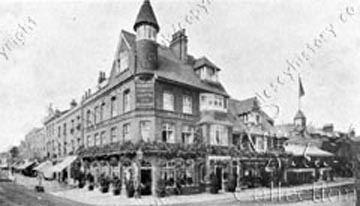
Dennis Hyde writes: 'Really interested in your article - we visited the Thames hotel many times in the early '70s (click here) . Would you have any photos of the club?'
[I had not included a picture of the Thames Hotel in Hampton Court / East Molesey on the Kingston Jazz page, but I have found a page online here that includes a picture of the Thames Hotel (?Tagg's). Is this the venue others remember? Ed]
2021.12
Alan Worrell writes: 'I have been fascinated reading your history of jazz for several reasons. I was born in 1945, and at school at the age of about 13, formed a skiffle group with school friends. One of them was Ian 'Mac' McLagan...I then took up drums and played in several local 'pop's groups, although I loved all styles of music. One of my first jobs leaving school was at an engineering factory in Hounslow. One of the chaps working a lathe, called Pete ...to me he looked like Buffalo Bill., after chatting, found out he also played drums in a trad jazz band...He said why not pop along to where he played on a friday night, the hall at the back of The Cardinal Wolsey near Hampton Court, was about 1961, mention him at door....this I did and was delighted to sit in on one of their numbers, impressed the girl I was with at the time. Having read your article it gives me Peter's surname, Mawford (I think). Do you know of his where abouts etc...For the record I had a break for drumming of 50 years, but took up again 7 years ago, live in Sunbury and play in 2 groups locally....'
[Chris Mitchell mentions Pete Mawford further up the page. Please contact us if anyone knows of Pete.]
2022.6
Simon Carter writes in June 2022: 'This is an overdue and somewhat inevitable notice to confirm that the Sunday evening jazz gig at The Boaters Inn in Kingston-upon-Thames has officially finished and will not be restarting. The gig had already been cut down from weekly to monthly at the beginning of 2020 so I always feared that the COVID lockdown might spell the end of the gig. However, I carried a small amount of hope that the pub might get in touch to restart the gig when the restrictions were lifted and the pub was back on its feet, but unfortunately that never happened.'
'I’m sad that the gig never quite reached the official 30th anniversary in October of 2020 but I’m proud that the gig lasted for so long and had become the longest running weekly jazz residency in London.
I have to thank David Rowe who foolishly offered to help me manage the gig’s website and found himself doing it for the next twenty years! I also have to thank the various pub management and bar staff who were supportive of the gig and had a vested interest in helping to keep the gig running smoothly, even when I wasn’t there. Mostly, I want to thank all the musicians who did the gig, despite the long journeys they had to make and were vital ingredients in creating such a wonderful gig.'
2022.7
© Sandy Brown Jazz
Click HERE for our mailing list and we will email you when an update to the website is made.
Other Articles that might be of interest: