NEW VINYL
The Vinyl Curtain
This is the second article that appears on this website about the suggested 'revival' of vinyl album. The first was in 2009 (see below). This article queries whether that 'revival' is really taking place.
In June 2014, the Lenco company launched a new turntable. Why? The company has been around for a long time, so you would think they know what they are doing. Any company that invests in a product must believe there is a market for it. James Royston of Lenco believes there is and he showed me the range of turntables available from the company. (Click here for the Lenco website and the L-175 turntable details).
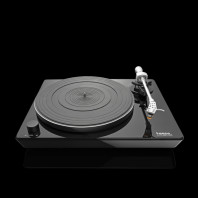 Lenco was ‘born’ in Switzerland in 1946 by Fritz and Marie Laeng. The company says: ‘From the dawn of the commercial turntable, Lenco were a premium audio brand. If you fell in love with music listening to Vinyl in the 1960s and 1970s – chances are you heard it through a Lenco turntable. Now, over half a century on, Lenco are still a premium audio brand, still innovating with the very latest Swiss audio technology and still loved by those in the know across Europe. 2014 is an exciting year for Lenco as they launch a range of innovative Bluetooth and Tower speaker systems but also, return to their roots with a reinvention of the turntable for the 21st Century’.
Lenco L-175 Turntable
Every now and again, we mention on this site news of the re-emergence of vinyl, but I wonder what other evidence there is for this? Which side of the curtain is the real side?
We live in an age of convenience. You cannot play vinyl in the car or walk around with it listening through earphones. Vinyl demands that you make time to take an album out of a sleeve, plug in the turntable, turn on the amp, place the record and stylus and then, usually sit down to listen. That in itself is a good thing, taking time out to slow down and listen to music of whatever type, but the majority of people tend to use mp3 recordings on iPods, iphones, stream music through Spotify, or whatever, as they do other things. The quality of sound has improved on these devices but not everyone is convinced.
Last month Steve Day reviewed a new album for us by Nat Birchall. The album has received a great response and interestingly it has been released on a double LP and download only, a decision Birchall took on listening to the tapes and thinking the music really suited the warmth of vinyl.
In April, John Harris wrote an article for The Guardian newspaper about Record Store Day. He interviewed Spencer Hickman who runs Jumbo Records in Leeds, a shop that sells vinyl, CDs and gig tickets. ‘It is a lovely place: somewhere any devotee of music could spend endless hours … and the promotional posters on the walls attest to a culture in which the past is now an integral part of the present’.
Jumbo Records majors mostly on rock music. John Harris wondered whether: ‘ … as rock and roll enters its seventh decade, might it actually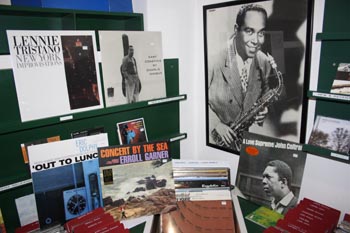 be about the defence of the music itself?’ In response, Hickman pointed to recent releases of a 7-inch single by pop group One Direction and three vinyl albums of classical music conducted by Herbert von Karajan.
The two ‘rockers’ Harris and Hickman went on to consider jazz. Harris wondered if there are any historical precedents ‘for the ageing multitudes who now keep rock’n’roll in business?', Hickman says that when he was a kid, guys were into trad jazz. ‘That was a kind of a generational thing. I hated trad jazz … But that music had been the expression of a teenage culture: even in the late 50s, it was bound into CND, and all that. So it was actually a lot more interesting than we might think’. And then Harris discovers that a twenty-six year old customer at Jumbo Records who has a Spotify account buys music exclusively on vinyl, ‘a habit she inherited from her dad, a lifelong fan of punk rock’.
Of course, vinyl records are more expensive than CDs, which in turn are often more expensive than mp3 downloads, which are more expensive than a Spotify basic account. For people on a budget, they may frequent Amazon and/or iTunes purely from a financial point of view. We should also remember that in ‘the day of the vinyl’ people used to react against the surface noise on records, something that disappeared when cassette tapes arrived.
 The cost of a good turntable makes buying one an investment, so you either have to have plenty of money or a commitment to preferring vinyl. If you take a middle ground, you can always invest in a turntable that will convert your vinyl into mp3 tracks that you can play on the move.
I continue to read that vinyl sales are increasing, but would like to see what the evidence is for this and which genres of music are able to make sufficient sales of vinyl to be profitable. In January this year, The Telegraph newspaper reported that Vinyl sales are at their highest level for fifteen years according to the British Phonographic Industry (click here).
‘Just over 780,000 vinyl albums were sold in 2013 – the largest number since 817,000 were sold in 1997. The 2013 figure also constitutes a 101 per cent rise on 2012 sales … digital album sales were up by 6.8%, CD sales dropped by 64% and subscriptions to Spotify and Deezer rose above £100 million for the first time’.
It is certainly true that there is a growth in second-hand vinyl, I heard of another new shop in Dorset only last month and we recently reported on a new shop in Somerset that has a good selection of second-hand jazz vinyl albums.
Lenco says: ‘Since Lenco passed into Dutch hands at the end of the nineties, more than 1.5 million record players have been sold worldwide’. That’s a lot of turntables. You can watch a video promoting the new Lenco L-175 USB direct drive glass turntable if you click here,
or read more information if you click here.
Other Lenco turntables at a variety of prices are available through Amazon (click here), and a more extensive price range of other turntables can be seen if you click here.
There is a further article in The Guardian from 16th May - The Art Of Noise - that you can read if you click here. In the article, Christopher Fox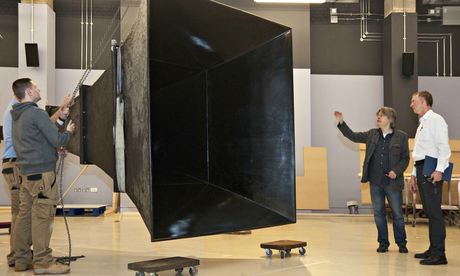 discusses the evolution of recording as an historic audio installation opens at the Science Museum in London. The exhibition, The Exponential Horn: In Search Of Perfect Sound, runs from 20th May 2014 to 20th November 2015 (click here for details).
The Exponential Horn at the Science Museum Exhibition
Christopher Fox says: 'But it is recording formats that matter most to listeners, and now that the LP is with us again it's easy to see why we missed it. There's room for enough of one sort of music – a Brahms symphony, Kind of Blue – but not too much. There's a necessary break which, especially in pop music, imposes a set of helpful creative questions: is side two a variation of side one or should each new side offer a new style, a new energy? Above all, analogue formats remind us that in recording and listening we don't have to be passive. In an age when we can wallpaper our lives with a random shuffle of MP3s, there's something splendidly willed about choosing to put a record on a turntable. It's a choice that necessitates more choices.'
'In 1972, in Ways of Seeing , John Berger described how, "for the first time ever, images of art have become ephemeral, ubiquitous, insubstantial, available, valueless, free". Some time in the last decade innovations in recording and distribution reduced music to a similar condition, but it may be that installations such as The Exponential Horn and the boom in LP sales will restore some of that lost tangibility and substance, music to value rather than to throw away.'
So, is vinyl really with us again? In May, I looked in two London record shops that keep jazz vinyl, Ray's Jazz at Foyles in Charing Cross Road and Harold Moore's Records in Great Marlborough Street. As far as I could see, most of the vinyl was second-hand. The new pressings on 180 gram vinyl do not seem to be that many, no more than I have seen around for a few years now, and mainly classic recordings rather than a glut of recordings by current musicians. I think I should still like to see more evidence of the 'big come back'. Perhaps you can enlighten me?
It would be interesting to hear from our readers whether you are still playing / buying vinyl, new or otherwise contact us and let us know.
New Vinyl - 2009
It’s 2009, and in Broad Street Jazz record shop in Bath there is a section dedicated to new jazz vinyl long playing records. There is another section with second-hand vinyl, but there are fewer sales from that rack and so Jon Turner, the owner of the shop, is thinking of scrapping it and expanding the new vinyl selection.
There is little likelihood of new shellac 78 rpm records returning, nor are we likely to see the comeback of pre-recorded jazz tapes. The rumour is that CDs may have had their day and that the future lies in downloading music as mp3 files to ipods or computer hard drives, or simply to use providers like Spotify where you can access the music you want at anytime without owning it at all. No need any more for physical music carriers, just music on demand - but here in Broad Street Jazz is Vinyl - still new, still spinning and still selling.
Jon’s shop currently carries around 30 – 40 vinyl titles. Many are jazz classics from Miles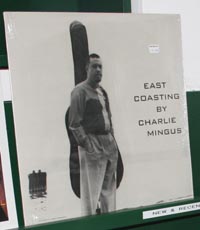 Davis, Coleman Hawkins, Billie Holiday and other key musicians, and prices vary from around £13.99 to over £20.00.
So who buys them? Mostly those people who believe that some of the warmth, texture and sound detail of recordings are lost when they are ‘digitalised’ and compressed to mp3 or other formats. Jon has customers who have returned to buying record decks and sound systems so they can capture the essence of the original recordings. They are primarily people who take time out to sit and listen to music and who have not just settled for the convenience of slapping on a CD or plugging in an ipod on the move. (Some of course do both).
It seems that there are a number of local people who have gone down this route, but there are also visitors to Bath who visit the shop and take away the vinyl rather than buy CDs. A generalised profile seems to be professional people aged between 30 and 55 with a reasonable income, who have invested in good quality hi-fi and want good quality records to play on it. Many return to the shop knowing that Jon holds a changing selection of LPs
Most of the vinyl is produced on the Continent – Germany, Spain - although some comes from the United States. Of course, the economic climate has seen prices of imports rise a little. The quality of the vinyl itself can also vary with some records produced on 180 gram vinyl, others on cheaper 140 gram material. There can also be a variation depending upon whether the transfer to vinyl has been made from original masters or from other vinyl – but that can be the same for any other recording format. Vinyl records are not made in huge quantities, and so inevitably the prices can be higher than CDs or downloads.
However, it is interesting that recently some recording companies, such as ECM, have simultaneously released a few albums on vinyl as well as CD and downloads.
The situation is not a new phenomenon. In 2002, the Telegraph newspaper reported a  comeback of vinyl sales. An article by Chris Hastings noted that two million albums and eight million singles (not specifically jazz) had been sold in 2001 almost doubling the figures for 1996. The number of sales were in excess of those for tapes and MiniDiscs.
Ian Dewhurst, the head of Simply Vinyl, the country’s largest manufacturer and distributor of vinyl records at the time, said: “The vinyl we sell is massively superior to that which you would have found in a shop in the 1970s. Towards the end of its last life, the stuff being put out by record companies was of very poor quality. They were like Frisbees. Vinyl is the best way of showing your appreciation for music. If you want instant coffee, buy a CD; if you want fine wine, by an LP”.
In 2006, Thomas Green for the Telegraph was making a similar case for vinyl with predominantly independent labels fuelling the boom. The boom in single sales was nevertheless a ‘drop in the ocean’ compared with 1979, when single sales in Britain peaked at 89 million. Even so, the article pointed out that the CD single faced being phased out the following year.
The 2006 article saw the ‘saviours’ of vinyl being DJs who still preferred to operate with two turntables and a collection of records, and the company Simply Vinyl mentioned above which was still producing records. Once again the sound quality too was a fundamental argument in favour of the record: “A lot of kids are used to the crap sounds of mp3s,” said Khalid Mallassi from Catskills Records. “They’re normally 160kpbs (the quantity of memory per second) so the quality’s rubbish. As soon as they hear something with the warmth of vinyl, they tend to pick up on it because it sounds so much better.”
The article also pointed to the fact that a new generation of cutting engineers had revitalised the industry, and that pressing plants in England, Holland and Prague had been taken over by experienced, caring people who had previously managed the plants when they were owned by larger companies. Numaan Ahmed of the company GZ Media in Lodenice, just outside Prague, said: "The records can be cut to whatever size and colour is required. Twelve-inches can be anywhere between 140g and 220g.”
In 2008, the Times newspaper took up the theme with Tower Records reporting a 36% increase in sales of LPs. The sound quality and the more interesting packaging were again given as reasons. Clive Branagan from Tower Records in Dublin said: “It takes more of an effort to listen to a record – you have to sit down and play the thing properly from start to finish whereas a lot of people growing up now with mp3s listen to one track more than the album itself.” Dave Kennedy from Road records, also in Dublin, added: “We were getting people saying ‘All I want to do is go home in the evening, listen to a record and relax, but I’ve got to turn on my computer and find the files.’ Whereas you put on a record, sit down and read the paper.”
Last, but by no means least, there are the LP album sleeves – some great artwork and a good helping of detailed information that you can sit and read without a magnifying glass.
It will be interesting to see whether and how the sale of vinyl and CDs survives the current sacrifice of record shops to the economic climate. We must treasure the independent  record shops that we still have.
Oh, and if you would like to know how a vinyl record is made, you will find an interesting video on YouTube: Part One : Part Two.
© Sandy Brown Jazz July 2009 - 2014
Back to top